Abhivyakti Foundation: Empowering Communities, Transforming Lives
This project is supported by the Uttar Pradesh State AIDS Control Society (UPSACS) under the National AIDS Control Program, aiming to address HIV prevention, care, and support among high-risk populations in Bijnor district.

Our Targeted Intervention Project in Bijnor, Uttar Pradesh With the support of UPSACS, Abhivyakti Foundation proudly implements a comprehensive Targeted Intervention (TI) Project in Bijnor district, reaching approximately 700 beneficiaries across three key vulnerable populations: Injecting Drug Users (IDUs), Transgender Communities (TG), and Female Sex Workers (FSWs). Our approach is holistic, combining health services, empowerment initiatives, and social support to reduce HIV transmission and improve the overall well-being of these communities.
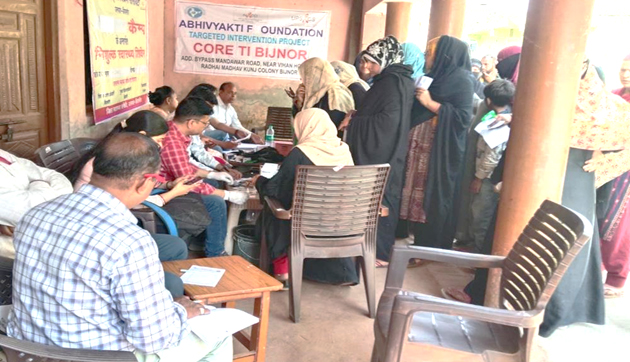
Our Mission Our core mission is to reduce HIV transmission among high-risk groups while addressing their health, social, and economic challenges. We strive to ensure dignity, inclusion, and improved quality of life for all beneficiaries by providing targeted support and creating a safe environment for community engagement.
Our Services
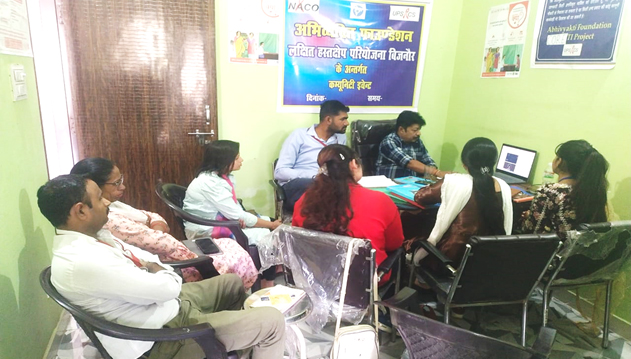
1. Prevention Services Abhivyakti Foundation offers a robust set of prevention services aimed at minimizing high-risk behaviors and improving overall health outcomes:
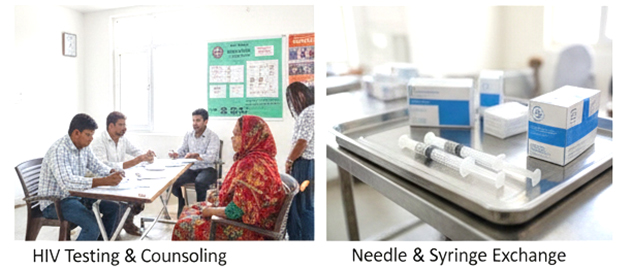
- • HIV Testing and Counseling (HTC): Confidential, voluntary HIV testing is offered alongside pre- and post-test counseling. Counseling sessions are tailored to each individual, helping them understand their results, adopt safer behaviors, and link to care when necessary.
- • Needle and Syringe Exchange Programs (NSEP): Targeted at IDUs, this program provides sterile injecting equipment to prevent the transmission of HIV and other blood-borne infections. The program also educates beneficiaries on safe injection practices.
- • Condom Distribution: Free condoms are provided along with demonstrations on correct usage. This is combined with awareness sessions about safer sexual practices, encouraging behavioral change.
- • Sexually Transmitted Infection (STI) Management: Regular screening, timely diagnosis, and treatment of STIs are conducted at TI clinics and through referrals to healthcare facilities, improving sexual and reproductive health outcomes.
2. Support Services To ensure holistic care, we provide tailored support services that address both medical and psychosocial needs:
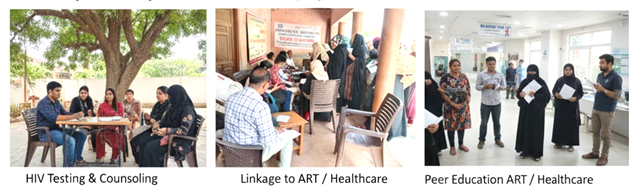
- • Peer Education: Community members are trained as peer educators to provide information, guidance, and emotional support, acting as trusted bridges between the project and beneficiaries.
- • Behavioral Change Communication (BCC): Structured sessions educate beneficiaries about risk reduction, healthy lifestyles, and strategies to prevent HIV transmission.
- • Crisis Management: Emergency support, including legal assistance, referral to health facilities, and psychosocial counseling, is provided to individuals in distress.
- • Linkage to Care: Beneficiaries are linked to ART centers, healthcare facilities, and social support services to ensure continuity of care and treatment adherence.
3. Empowerment Initiatives Our program goes beyond health services to foster self-reliance, social inclusion, and advocacy:
- • Skill Development Programs: Training and mentoring are provided to enable beneficiaries to access alternative livelihoods, reducing dependency on high-risk occupations.
- • Community Mobilization: Safe spaces for community meetings, peer networks, and support groups are created to strengthen solidarity and shared learning.
- • Advocacy: We actively engage with stakeholders, including local authorities and community leaders, to reduce stigma and discrimination.
- • Social Entitlement Support: Assistance is provided to beneficiaries for accessing government schemes, documentation, and rights-based services, ensuring long-term social security.
Our Impact The program’s implementation has yielded remarkable results, demonstrating both quantitative and qualitative improvements in beneficiaries’ lives. Outreach workers, peer educators, and counselors maintain close engagement with the communities to monitor progress, assess outcomes, and adjust strategies as needed.
| Key Indicators | Achievements & Impact | Current Status / % Success |
|---|---|---|
| Beneficiary Reach | 700 high-risk individuals actively enrolled and consistently engaged in services | 100% coverage of targeted population in project area |
| HIV Testing Uptake | All beneficiaries offered confidential HIV testing; 95% tested within the last 6 months | 95% tested |
| Needle & Syringe Exchange Participation | Regular participation by IDUs; reduction in needle-sharing incidents observed | 88% IDUs report safe injection practices |
| Condom Usage | Behavioral sessions + free distribution led to increased consistent usage among TG and FSWs | 82% report consistent condom use |
| Linkage to ART / Healthcare | Immediate referral and follow-up for positive cases | 90% successfully linked to ART / care services |
| STI Management | Regular screening and treatment improved health outcomes | 85% of identified STI cases treated and cured |
| Peer Education & Community Engagement | Active peer networks conducting BCC sessions | 100% peer educators trained; 75% of beneficiaries attend at least 1 session/month |
| Skill Development & Livelihood Support | 120 beneficiaries enrolled in vocational training | 70% successfully completed training and engaged in alternative livelihoods |
| Social Integration & Stigma Reduction | Community workshops and advocacy led to increased acceptance | 65% beneficiaries report improved community acceptance |
These results highlight that the project not only reduces HIV transmission but also enhances quality of life, strengthens social cohesion, and empowers marginalized communities. Beneficiaries report increased confidence, improved health-seeking behavior, and enhanced social participation.
Monitoring, Evaluation, and Best Practices
- • Real-Time Data Tracking: Digital systems track beneficiary engagement, testing, and treatment outcomes.
- • Community Feedback Mechanisms: Regular surveys and focus group discussions help adapt interventions to community needs.
- • Innovative Outreach: Mobile units reach hidden populations in remote areas.
- • Peer-Led Models: Peer educators facilitate engagement, build trust, and improve behavior change outcomes.
- • Collaborative Partnerships: Partnerships with local NGOs, healthcare providers, and government agencies strengthen program reach and sustainability.
Challenges and Mitigation
- • Stigma and Discrimination: Mitigated through community advocacy, sensitization workshops, and peer support.
- • Retention of IDUs and FSWs: Continuous follow-up, crisis support, and incentives for engagement improved retention.
- • Access in Remote Areas: Mobile outreach and home visits ensure comprehensive coverage.
Adoption of Best Practices & Innovations The project continuously integrates best practices and innovative approaches:
- • Use of mobile outreach units for hard-to-reach populations.
- • Introduction of digital tracking systems for real-time monitoring of service delivery.
- • Peer-led initiatives and community champions to drive awareness and behavioral change.
- • Partnership with local NGOs and health authorities to strengthen continuum of care.
Join Our Efforts Abhivyakti Foundation invites collaboration from:
- • Healthcare providers to expand clinical services and referrals.
- • Government agencies to strengthen policy support and social entitlements.
- • Community organizations to enhance outreach and empowerment programs.
- • Volunteers and supporters to provide mentorship, advocacy, and resource support.
Through sustained engagement, comprehensive services, and community empowerment, the Bijnor TI Project continues to transform lives, reduce risk behaviors, and create resilient, healthy communities.