Project UNNATI: Empowering Rural Women Through Skill Development
Project UNNATI, implemented by Abhivyakti Foundation with generous support from HDFC Bank CSR and collaboration with BharatCare, is a transformative initiative designed to empower rural women in Dujana village, Gautam Budh Nagar, Uttar Pradesh. Conducted through the Shreeja Nav Kaushal Vikas Kendra, the project sought to establish a sustainable livelihood model by equipping women with advanced tailoring skills, modern infrastructure, and market access. Dujana, recognized under the One District One Product (ODOP) scheme as part of the “City of Apparel,” presented immense potential for garment-based livelihoods, yet rural women were largely excluded from these opportunities due to limited skills, infrastructure, and market exposure.
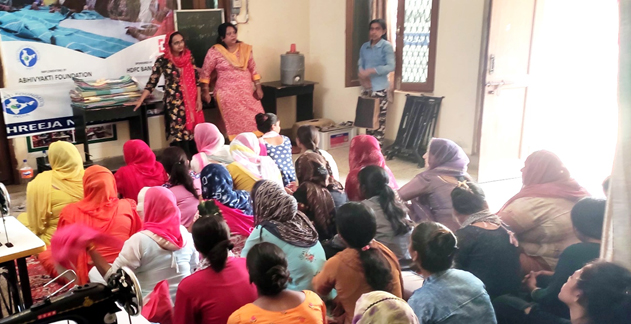
By creating a state-of-the-art Common Facility Centre (CFC) and offering hands-on training, Project UNNATI bridged this gap, enabling women to transition from dependency to self-reliance while fostering entrepreneurship and digital inclusion.
Project Objective
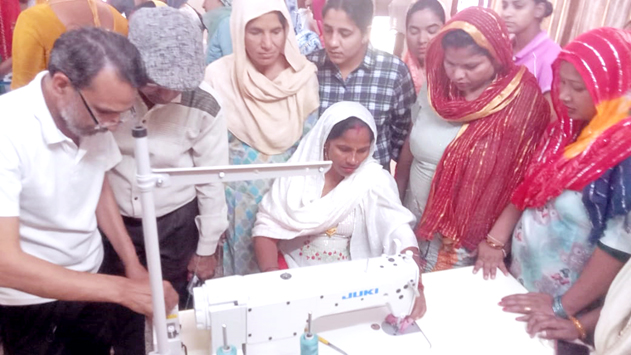
The core objective of Project UNNATI was to enhance employability and entrepreneurship among rural women by providing intensive skill development in embroidery, tailoring, e-commerce, and digital marketing. Through this intervention, women not only gained technical proficiency but also the confidence, financial literacy, and digital skills necessary to thrive in modern markets.
Project Implementation
Common Facility Centre (CFC) Development
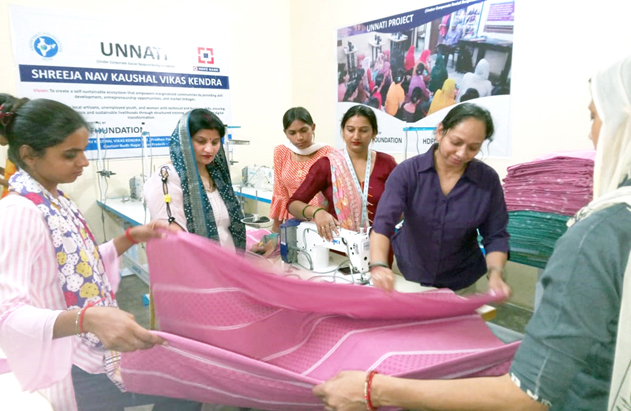
The heart of Project UNNATI is the Common Facility Centre, which functions as both a training hub and a production unit. Women now have access to professional-grade equipment they could not afford individually, ensuring high-quality output and practical learning. The CFC is equipped with industrial sewing machines, computerized embroidery units, professional cutting and pressing tools, a solar power backup system for uninterrupted operations, digital workstations for e-commerce management, and a dedicated product display and sales area. By incorporating renewable energy, the CFC not only supports environmental sustainability but also reduces operational costs, ensuring long-term viability.
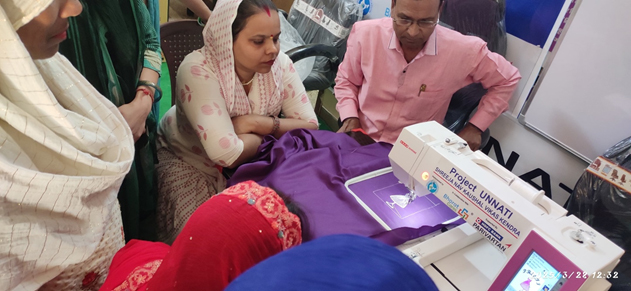
Skill Development Training
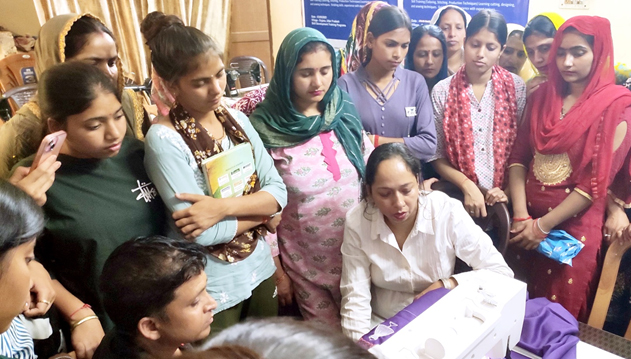
A total of 100 women from Dujana and surrounding villages were mobilized and enrolled in intensive training programs combining technical, business, and digital skills. The training was structured to cover:
Technical Skills: Participants learned the fundamentals of cutting, stitching, garment finishing, advanced embroidery, and applique work. They also mastered quality control standards to produce market-ready garments meeting industrial benchmarks.
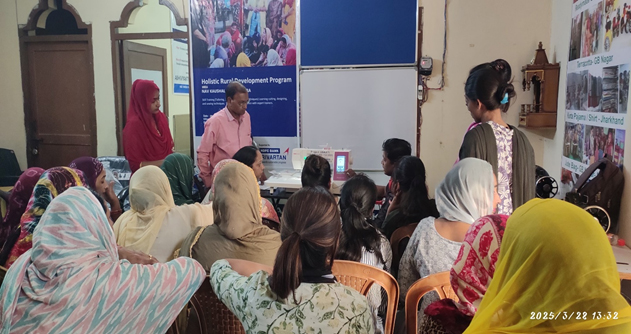
Business and Digital Skills: Training included marketing, branding, e-commerce platform usage (Amazon, Flipkart, Meesho), financial literacy, digital payments, and basic accounting. Exposure visits to modern garment units like Sahu Exports provided real-world insights into industrial production and employment opportunities.
This holistic approach ensured that women were not only skilled artisans but also equipped to manage businesses, sell online, and engage with institutional buyers.
Market Linkages and Industry Integration
Post-training, participants were connected to multiple market channels. Employment linkages with local garment units like Sahu Exports provided formal job opportunities. Women were trained and onboarded to e-commerce platforms to sell products online, while participation in local and regional exhibitions created visibility for their work. Institutional recognition was achieved through significant orders from NABARD Mumbai (₹19 lakh) and NABARD Lucknow (₹3 lakh), demonstrating the quality and credibility of the products and offering a pathway to long-term partnerships.
Impact and Achievements
Employment Transformation
The project achieved significant employment outcomes, transforming the status of women from largely unemployed to economically active contributors:
| Employment Type | Before Project | After Project Completion | Transformation Highlights |
|---|---|---|---|
| Self-Employed (Tailoring/Boutique Work) | 10% | 60% | Majority of women now manage home-based tailoring units or small boutiques, generating steady income. |
| Working in Apparel Industry | 5% | 15% | Women placed in organized garment units, enhancing financial independence. |
| Selling Products Online | 0% | 10% | First-time digital entrepreneurs selling through e-commerce. |
| Unemployed | 85% | 15% | Significant reduction in unemployment, reflecting overall economic empowerment. |
Income Growth
The program also resulted in remarkable increases in household income, enabling better access to education, healthcare, and savings:
| Monthly Income (₹) | Before Project | After Project Completion | Impact Summary |
|---|---|---|---|
| Below ₹3,000 | 60% | 10% | Drastic reduction in low-income households, indicating immediate financial upliftment. |
| ₹3,000 – ₹7,000 | 30% | 40% | Majority of women now earn a stable, mid-range income, reducing economic vulnerability. |
| Above ₹7,000 | 10% | 50% | Half of the beneficiaries now enjoy higher earning potential, ensuring sustainable livelihoods. |
Social and Digital Empowerment
Beyond income, Project UNNATI significantly enhanced social, educational, and digital outcomes:
| Indicator | Before Project | After Project Completion | Improvement |
|---|---|---|---|
| Women able to afford healthcare | 30% | 80% | Improved access to healthcare for themselves and their families. |
| Children enrolled in school | 60% | 90% | Increased household income ensured uninterrupted education. |
| Women using digital tools & UPI | 10% | 100% | Full digital literacy achieved, enabling e-commerce and online banking. |
| Women confident in decision-making | 25% | 85% | Significant boost in self-reliance and participation in family decisions. |
These results reflect profound social transformation, with women emerging as confident leaders and active contributors to their families and communities.
Qualitative Impact
Project UNNATI has fostered enduring transformations in mindset, confidence, and community engagement. Women who previously had limited economic participation now manage businesses, mentor peers, and influence household decisions. Families have become more supportive, with male members participating in production and sales. The program has cultivated an entrepreneurial mindset, encouraging women to envision expanding businesses, producing diversified products, and mentoring the next generation.
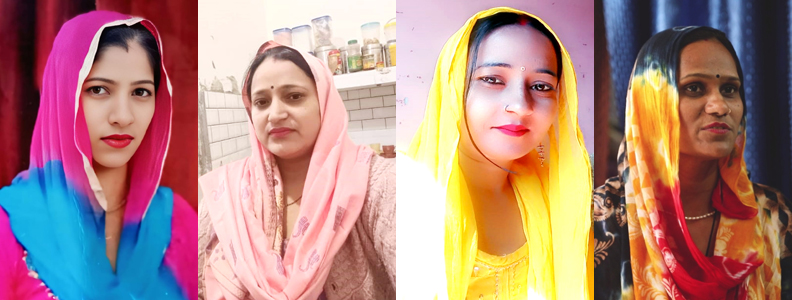
Case Stories of Transformation:
- 1. Rajani, once limited to basic stitching, now operates her own tailoring business, supporting her children’s education and household needs while building confidence and social respect.
- 2. Sushma, through advanced industrial training, secured employment at Sahu Exports, demonstrating how training translates into formal career pathways.
- 3. Anita established a boutique specializing in designer kurtis and palazzo pants, employing two women from her village and creating a sustainable micro-enterprise.
Partnerships and Collaboration
| Partner | Role and Contribution |
|---|---|
| HDFC Bank CSR | Primary funding partner, financing infrastructure, training, and operational costs. |
| Abhivyakti Foundation | Implementing partner, responsible for mobilization, training design, and community engagement. |
| NABCONS & NABARD | Technical guidance, institutional validation, and facilitation of large-scale orders. |
| Sahu Exports | Industry partner providing employment opportunities and exposure to commercial garment production. |
Sustainability and Future Roadmap
Project UNNATI has established a long-term model of rural empowerment through skill development:
- 1. The CFC operates sustainably using a revenue-sharing model, covering operational costs.
- 2. Plans are underway for product diversification, including home textiles, designer accessories, and value-added garments.
- 3. Periodic refresher trainings will ensure women stay updated on market trends and digital marketing strategies.
- 4. Expansion includes opening two additional CFCs in nearby villages, replicating the UNNATI model.
- 5. Integration with government schemes like Mudra and PMEGP will ensure financial sustainability and scaling.
- 6. Leveraging digital tools, AI design, and automated production will further enhance productivity and market reach.
Conclusion
Project UNNATI demonstrates the transformative power of a holistic, well-implemented skill development program. Through the establishment of a solar-powered, fully-equipped CFC, intensive training, market linkages, and digital empowerment, the project successfully transformed the lives of 100 women in Dujana village.
From high unemployment and low incomes, women now enjoy increased earnings, employment in industrial units, and entrepreneurial success, accompanied by social recognition, confidence, and leadership. Institutional orders from NABARD and online market success validate the quality and scalability of the intervention.
UNNATI is not merely a completed initiative; it is a replicable, sustainable model for rural women’s economic empowerment that demonstrates how skill development, infrastructure, and market integration can produce lasting social and economic impact.