Empowering Rural Women Through Fabric Craftsmanship
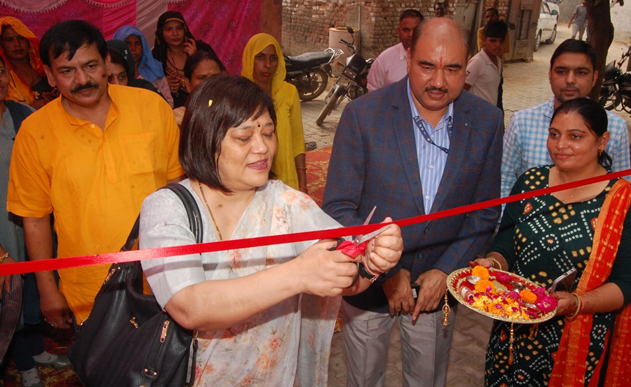
Abhivyakti Foundation, with the generous support of NABARD, proudly announces the successful completion of its Livelihood and Enterprise Development Programme (LEDP) focusing on Fabric Household Products in Palwal, Haryana. The initiative was designed to strengthen livelihood opportunities and foster entrepreneurial skills among rural women from Self-Help Groups (SHGs) across three vibrant clusters of Kushak, Hari Nagar, and Tikri Gujar villages in Palwal District.
Programme Overview
Under this transformative initiative, 90 women from various SHGs underwent extensive skill-based training aimed at enhancing their capabilities in producing a wide range of fabric-based household items such as bedsheets, cushion covers, and pillow covers. The programme was fully sponsored by NABARD, ensuring that every participant received not only quality skill training but also the tools and support needed to translate these skills into sustainable sources of income.
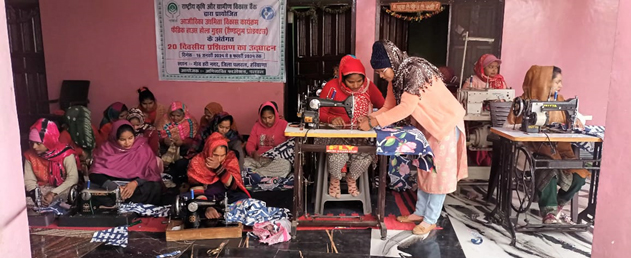
The training sessions were conducted in a hands-on and participatory manner, blending traditional craftsmanship with modern design sensibilities. Expert trainers guided participants through each stage of production, from fabric selection and cutting techniques to stitching, design innovation, embroidery, quality control, and marketing strategies.
Comprehensive Skill Development
The programme adopted a holistic approach to ensure that participants gained both technical proficiency and entrepreneurial acumen. Women were trained in fabric handling, design development, aesthetic coordination, embroidery work, finishing techniques, and basic business management. They also learned about product costing, quality assurance, branding, and digital marketing, equipping them to compete effectively in today’s evolving marketplace.

The inclusion of modules on design thinking and innovation empowered participants to create products that blend traditional Haryanvi motifs with modern aesthetics, enhancing the market appeal of their items. This fusion approach significantly improved product diversity and quality standards.
Implementation Approach and Methodology
The programme was implemented using a structured, multi-layered methodology to ensure sustainability and measurable impact. Practical learning sessions were combined with regular mentoring and feedback mechanisms. Trainers encouraged creativity and innovation, helping women develop unique product ranges aligned with customer preferences and market trends.

Participants were also introduced to basic financial literacy, record-keeping, and pricing strategies. They gained exposure to market linkages, interacting directly with buyers, local retail outlets, and online platforms.
To streamline production and marketing efforts, a marketing committee was formed among the trainees, responsible for collective decision-making, resource sharing, and coordination with potential buyers.

Market Linkages and Entrepreneurial Development
Following the completion of the training, Abhivyakti Foundation facilitated the establishment of multiple marketing linkages to ensure long-term economic sustainability for the trained women. The products crafted by these women artisans are now being showcased in local retail stores, weekly district markets, home décor exhibitions, and on online marketplaces for handcrafted goods.
Through active facilitation, two SHGs collaborated to purchase a specialized sewing machine for advanced designs and embroidery. This not only improved productivity but also enhanced the overall quality and diversity of products.
A notable achievement of this initiative was the formation of micro-enterprise units, where groups of trained women collectively produce and market fabric household items. Some of these units have already started generating consistent monthly income ranging between ₹4,000 to ₹8,000 per member, depending on the scale of production and market demand.
Impact and Achievements
The LEDP has created a profound and measurable socio-economic impact across the three target villages. Post-training assessment and monitoring indicate remarkable improvements in income, confidence, and social mobility among participants.

| Impact Area | Key Outcomes & Achievements |
|---|---|
| Economic Empowerment | Over 80% of trained women have begun independent or group-based production, increasing their monthly household income by an average of 45–60%. Many participants have diversified their product range and established small-scale enterprises at the village level. |
| Skill Proficiency | 100% participants demonstrated substantial skill enhancement, particularly in design, cutting, stitching, and finishing. Several women have mastered advanced embroidery and aesthetic design techniques. |
| Entrepreneurial Confidence | Around 70% of participants expressed readiness to run independent micro-enterprises. Women who previously had limited exposure to markets are now directly negotiating with buyers and retailers. |
| Social Transformation | The programme instilled a sense of self-worth and empowerment. Women who were once confined to domestic responsibilities now participate in community decision-making and economic planning. |
| Market Integration | A dedicated marketing cell has been created for continuous product promotion, resulting in a 30% rise in local market demand for fabric-based products produced by SHGs. |
Early Success Story: Sunita Devi’s Journey – From Homemaker to Entrepreneur
One shining example of transformation is Sunita Devi, a 35-year-old mother from Kushak village, who joined the LEDP with only basic stitching knowledge. Within weeks, she mastered advanced design and stitching techniques, crafting high-quality cushion covers that quickly sold at a local exhibition for ₹3,000. This was her first personal income, marking the beginning of her entrepreneurial journey.
Sunita now leads a small production group of five women who have already fulfilled an order for 50 cushion covers for a Palwal-based home décor store. The group plans to expand into Haryanvi embroidered products, creating a distinct identity for their enterprise. Sunita’s story reflects the larger impact of the programme — transforming homemakers into confident entrepreneurs.
Collective Progress and Community-Level Impact
The success of the LEDP goes beyond individual achievements — it has sparked a collective movement toward self-reliance. Many women have opened their first bank accounts, pooled savings to invest in tools, and established joint production setups.

A community-based Production and Marketing Committee has been constituted to coordinate raw material procurement, maintain quality control, and represent the artisans in exhibitions and fairs. The committee has already facilitated participation in two district-level handicraft events, resulting in sales exceeding ₹1.2 lakh within a short span.
Expected Long-Term Outcomes
The Fabric Craftsmanship LEDP is expected to deliver long-term benefits, including:
- • Sustainable income generation and self-employment for all trained women
- • Formation of producer groups for collective bargaining and raw material sourcing
- • Establishment of a local brand identity for Palwal’s handcrafted fabric items
- • Strengthened linkages with institutional and digital markets for continuous sales
- • Empowerment of women to become role models and trainers for future batches
Post-Training Support and Capacity Enhancement
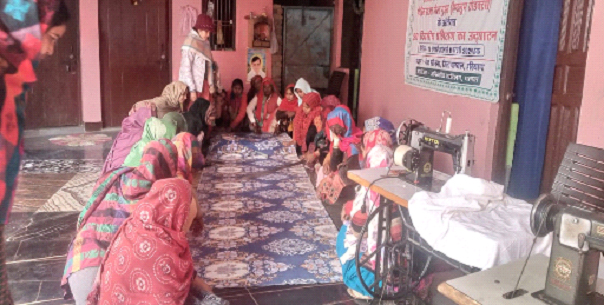
product diversification support to ensure sustained impact. Regular follow-up sessions are being held to monitor business performance, update product designs, and address operational challenges.
Participants are also being guided on accessing micro-credit, developing branding and packaging, and enhancing product visibility through digital promotion. Future plans include establishing a common production-cum-display center where SHGs can work collaboratively and store their products for larger orders.
Partners in Progress
The success of this initiative was made possible through a strong partnership between:
- • NABARD – for financial and technical support
- • District Rural Development Agency, Palwal – for community mobilization and infrastructure facilitation
- • Local Market Associations – for providing marketing spaces and promotional opportunities
Conclusion
The successful completion of the Fabric Household Products LEDP in Palwal has not only upskilled rural women but has also transformed their socio-economic identity. The participants now stand as independent entrepreneurs, skilled artisans, and agents of change in their communities.
Through NABARD’s unwavering support and Abhivyakti Foundation’s continuous mentorship, the initiative has demonstrated that when rural women are empowered with skills, confidence, and opportunities, they can redefine both their livelihoods and the future of their communities.
The Fabric Craftsmanship LEDP stands as a model of rural enterprise development, symbolizing the journey from training to transformation, and proving that empowered women build empowered communities.