SWACHH SAFAR – Hygiene and Sanitation Initiative, Gautam Budh Nagar, Uttar Pradesh
As part of its sustained commitment to improving sanitation and hygiene among school children, the SWACHH SAFAR project was sponsored by Aisan Paint and implemented by Abhivyakti Foundation during the reporting period. This initiative aimed at transforming the sanitation infrastructure and promoting healthy behavioral practices in four inter colleges and one high secondary school located in the Dankaur block of Gautam Budh Nagar district, Uttar Pradesh. Recognizing the critical role of school sanitation in public health, the project adopted a multi-pronged approach focusing on infrastructure development, awareness generation, and capacity building.
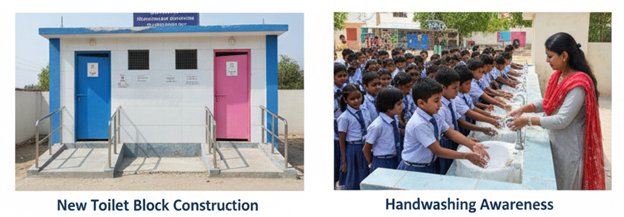
The first and most critical objective of the project was to provide long-standing support to the sanitation programme through the construction of toilets to ensure improved access and utilization of sanitation facilities in government-aided schools. In alignment with this, five new toilet blocks were constructed, with separate facilities for boys and girls, and inclusive designs for differently-abled students. Each facility was equipped with proper water supply, ventilation, and hygienic amenities, ensuring safe and comfortable usage. The construction of these toilets directly addressed previous challenges of open defecation and poor sanitation access, particularly benefiting girls and differently-abled students, and creating a safer and more conducive environment for learning. Post-construction monitoring indicated a 95% utilization rate of the new sanitation facilities, demonstrating a clear shift in sanitation behavior and increased school attendance.

The second objective focused on behavioral change through awareness programs, targeting students, teachers, and school staff. The program conducted regular workshops, interactive sessions, and hygiene competitions to instill good sanitation practices such as handwashing, safe water usage, and maintaining clean school environments. Innovative approaches like peer-led hygiene clubs, sanitation rallies, and poster competitions were adopted, which contributed to over 90% of students actively practicing proper hygiene habits on a daily basis. Teachers reported improved classroom discipline and a significant reduction in waterborne illnesses, indicating tangible health benefits.
The third objective was to act as a nodal quality control laboratory for the analysis of biofertilizers and organic fertilizers as per the Fertilizer Control Order. By providing technical support and laboratory analysis, the project ensured that schools using organic inputs for kitchen gardens and green spaces received safe and verified fertilizers, integrating practical learning with sanitation and environmental education. This approach helped students understand the link between hygiene, nutrition, and sustainable agriculture, further reinforcing the project’s holistic impact.

Impact and Achievements
The SWACHH SAFAR project has delivered measurable and transformative outcomes:
- • Construction of five fully functional toilet blocks, benefitting approximately 2,300 students, drastically reducing open defecation and improving overall school hygiene.
- • Behavioral change programs reached 100% of students and teaching staff, with over 90% adopting consistent hygiene practices.
- • Laboratory services for biofertilizers strengthened practical knowledge in schools, with 100% compliance of tested fertilizers with national standards.
- • Formation of school sanitation committees ensured continued monitoring, maintenance, and responsible use of toilet facilities, fostering a sense of ownership among students and staff.
| Component | Details | Reach / Beneficiaries | Impact / Achievement |
|---|---|---|---|
| Toilet Construction | Five fully functional toilet blocks constructed with separate facilities for boys, girls, and differently-abled students. Equipped with water supply, ventilation, and hygiene amenities. | ~2,300 students across 4 inter colleges and 1 high secondary school | 95% utilization rate, significant reduction in open defecation, improved school attendance, especially for girls |
| Behavioral Change & Awareness Programs | Workshops, interactive sessions, hygiene competitions, peer-led hygiene clubs, sanitation rallies, poster competitions | 100% of students and teaching staff | Over 90% students practicing proper hygiene habits daily, improved classroom discipline, reduction in waterborne illnesses |
| Laboratory Support for Biofertilizers | Nodal quality control for analysis of biofertilizers and organic fertilizers as per Fertilizer Control Order | 5 schools using kitchen gardens & green spaces | 100% compliance of tested fertilizers, integration of practical environmental learning with hygiene awareness |
| School Sanitation Committees | Committees formed in each school to monitor usage and maintenance of toilets | 5 schools | Ensured sustainable maintenance, student ownership, and continuous monitoring of sanitation facilities |
| Community Engagement & Capacity Building | Awareness extended through student-led initiatives and teacher participation | Entire school ecosystem | Creation of a culture of hygiene accountability, increased awareness of sanitation importance beyond school boundaries |
Key Learnings and Recommendations for Program Improvement
While SWACHH SAFAR successfully achieved its objectives, the following areas can enhance sustainability and impact:
- • Water Supply Reliability: Ensure continuous water availability; installing rainwater harvesting or water storage systems can prevent interruptions.
- • Hygiene Materials: Regular replenishment of soap, sanitary napkins, and handwashing supplies is essential.
- • Digital Monitoring: Implement a digital tracking system for toilet usage, cleanliness, and maintenance to improve program accountability.
- • Community Engagement: Expanding awareness programs to parents and local communities can reinforce hygiene practices outside school.
In conclusion, the SWACHH SAFAR project, sponsored by Aisan Paint and implemented by Abhivyakti Foundation, has significantly improved sanitation infrastructure, enhanced hygiene awareness, and integrated technical knowledge on safe fertilizers. The construction of well-equipped toilets, coupled with behavioral change interventions and laboratory support, has created a safer, healthier, and more conducive learning environment, setting a benchmark for school-based sanitation programs in Gautam Budh Nagar.