Integrated Water Management Scheme
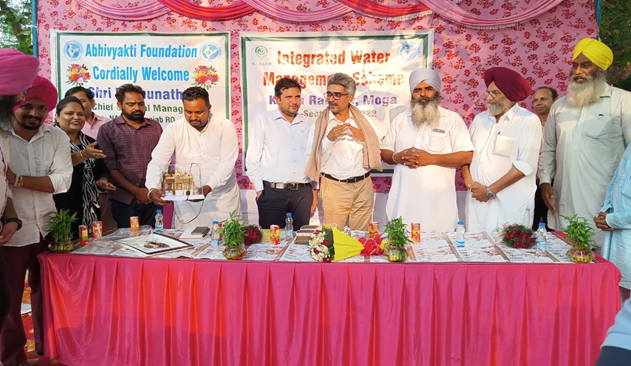
The Integrated Water Management Scheme (IWMS) represents a landmark partnership between Abhivyakti Foundation and NABARD, designed to restore the ecological balance and promote sustainable water use in the rural areas of Punjab. The initiative was implemented across five major villages—Khosa Randhir, Khosa Pando, Dhalle Ke, Rattian, and Ghall Kalan—and their adjoining regions in Moga district.
The project’s vision was to create a self-reliant water ecosystem through the rejuvenation of traditional ponds, scientific water conservation, and community-led irrigation management. It aligns with the broader mission of ensuring water, food, and livelihood security in rural Punjab, while simultaneously addressing the alarming depletion of groundwater resources.
Background and Rationale
Punjab’s agricultural growth has been both a boon and a challenge. Decades of groundwater extraction, intensive paddy cultivation, and neglect of traditional water structures have pushed several districts, including Moga, into the ‘dark zone’ category. Groundwater levels were declining sharply, traditional ponds had become clogged and unusable, and irrigation systems were inefficient.
Recognizing this crisis, the Abhivyakti Foundation, with the support of NABARD, conceptualized the IWMS as a comprehensive water management and livelihood enhancement program. The project was designed to integrate technical interventions with community participation, ensuring that natural water resources were not only restored but also sustained through collective ownership and local capacity building.
Project Area and Coverage
| District | Block | Villages Covered | Total Population Benefited | Total Agricultural Area Impacted |
|---|---|---|---|---|
| Moga | Moga-1 | Khosa Randhir, Khosa Pando, Dhalle Ke, Rattian, Ghall Kalan | 4,850 | 388 hectares |
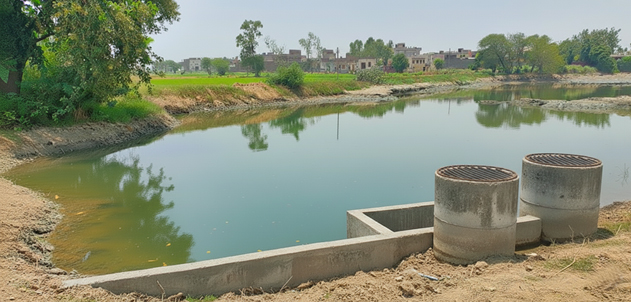
The five selected villages represented a mix of agro-ecological and socio-economic diversity. Each site was chosen based on the severity of water stress, agricultural dependence, and potential for surface water restoration through pond rejuvenation.
Project Interventions and Achievements
Pond Renovation and Capacity Enhancement
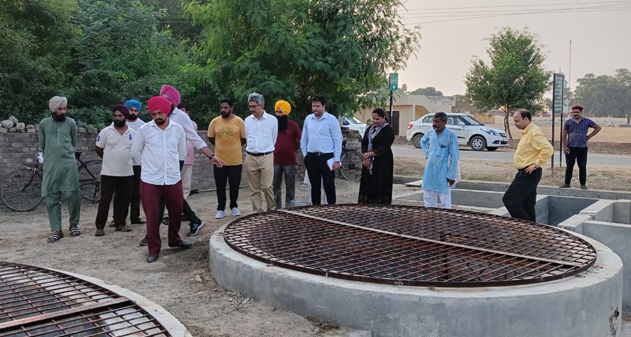
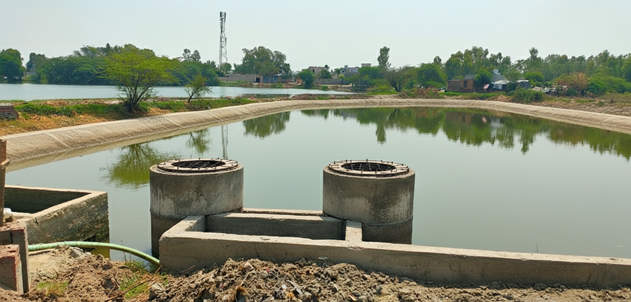
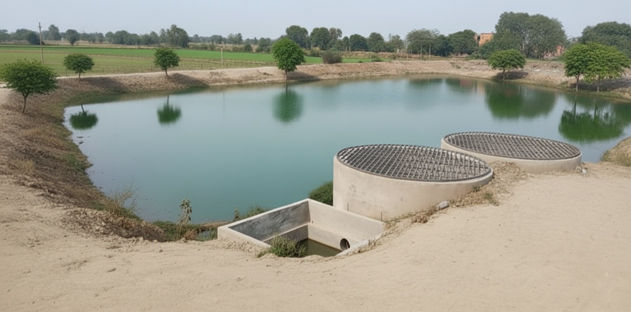
The foundation of IWMS lay in the scientific renovation of seven ponds across the five villages. The work included desilting, deepening, slope management, construction of inlet and outlet systems, installation of silt traps, and strengthening of embankments. This process revived stagnant ponds into efficient water reservoirs capable of harvesting and storing monsoon runoff for irrigation use.
| Village | Pond Capacity Before (cu.m) | Pond Capacity After (cu.m) | Increase (%) | Irrigable Area (ha) |
|---|---|---|---|---|
| Khosa Randhir (1) | 10,400 | 20,800 | 100% | 45 |
| Khosa Randhir (2) | 16,800 | 33,600 | 100% | 68 |
| Khosa Pando | 11,374 | 22,748 | 100% | 45 |
| Rattian | 4,000 | 8,000 | 100% | 17 |
| Ghall Kalan | 8,575 | 17,150 | 100% | 38 |
| Dhalle Ke (1) | 10,500 | 21,000 | 100% | 50 |
| Dhalle Ke (2) | 24,800 | 49,600 | 100% | 125 |
| Total | 86,450 | 172,900 | 100% | 388 ha |
The overall pond capacity was doubled, expanding total water storage from 86,450 cubic meters to 172,900 cubic meters, which now provides sustainable irrigation to nearly 388 hectares of farmland. The initiative not only improved irrigation availability but also contributed significantly to groundwater recharge through percolation.
Innovative 3-Well Water Treatment System
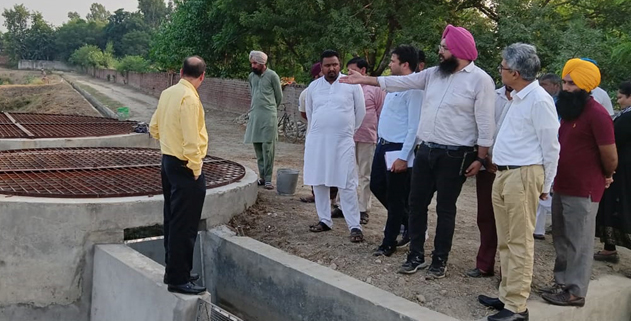
To ensure that the water stored and reused from ponds met quality standards, an innovative 3-Well Biological Filtration System was introduced. This indigenous technology was developed to treat sewage and rainwater before entering ponds.
| Stage | Description |
|---|---|
| Primary Filtration | Sedimentation and screening of incoming sewage and rainwater to remove solids and debris. |
| Secondary Filtration | A 6-meter diameter, 10-meter deep sedimentation well to separate suspended impurities. |
| Biological Treatment | Natural filtration through plantations of bamboo, banana, and papaya along pond embankments to absorb contaminants and promote eco-restoration. |
This three-tier system effectively purified wastewater, minimized foul odor, and improved pond ecology. The plantations along the pond edges not only aided biological treatment but also became an additional source of livelihood, creating green zones that enhance biodiversity and carbon sequestration.
Pipeline Irrigation Network
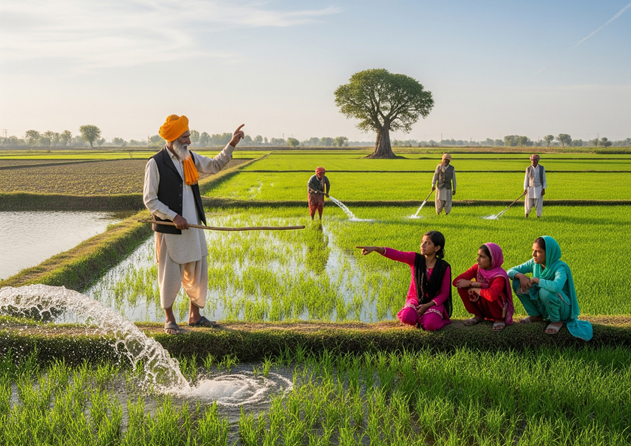
In partnership with the Department of Soil and Water Conservation, a pipeline irrigation system was installed in select villages to channel treated pond water directly to agricultural fields. This reduced water transportation losses, improved irrigation efficiency, and provided equitable access to water for small and marginal farmers.
| Village | Area Covered (acres) | Water Source |
|---|---|---|
| Dhalle Ke | 125 | Treated Pond Water |
| Khosa Pando | 110 | Pond Outlet Pipeline |
| Khosa Randhir | 45 | Pond Outlet Pipeline |
| Ghall Kalan | 20 | Treated Water Channel |
Farmers in these areas successfully utilized treated water for paddy irrigation, demonstrating the effectiveness and scalability of this model.
Agricultural Transformation and Crop Productivity
The availability of treated pond water and improved irrigation scheduling led to a visible rise in crop productivity. Farmers were able to adopt mixed farming and crop diversification, supported by continuous training and demonstrations.
| Crop | Baseline Yield (Quintal/ha) | Post-Project Yield (Quintal/ha) | Increase (%) |
|---|---|---|---|
| Wheat | 42 | 50 | 19% |
| Paddy | 58 | 70 | 21% |
Overall, the project brought a 20 percent average increase in wheat and paddy yields. The treated water, enriched with natural nutrients like nitrogen, phosphorus, and potassium, acted as an organic fertilizer—enhancing soil fertility and reducing the dependence on chemical inputs.
Economic and Livelihood Benefits
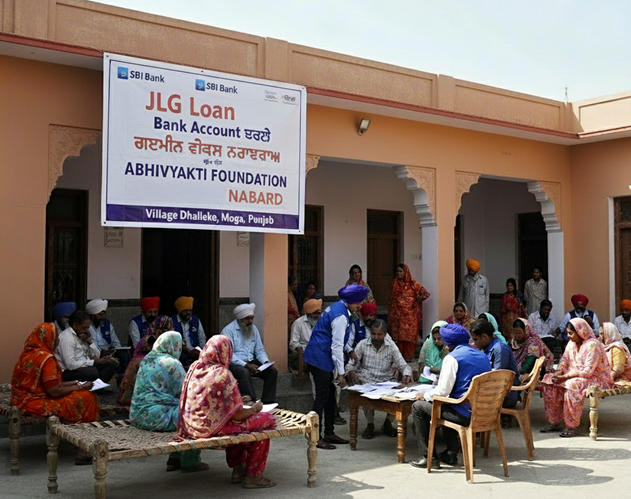
The Integrated Water Management Scheme provided direct and indirect economic gains to the community. The plantation of 1,509 bamboo plants, projected to expand to 30,180 within three years, is expected to generate approximately ₹15.09 lakh in revenue. In addition, 1,500 fruit-bearing plants, producing nearly 100 quintals of fruit annually, are estimated to yield ₹1.5–2 lakh per year.
The project also facilitated financial inclusion by forming 12 Joint Liability Groups (JLGs) that accessed credit worth ₹21,68,536. Furthermore, 12 individual farmers availed bank credit of ₹50,000 each from the State Bank of India, totaling ₹6 lakh. These funds were invested in improved seeds, farm machinery, and small-scale enterprises, ensuring diversified income and livelihood resilience.
Environmental and Social Impact
The rejuvenated ponds have significantly improved the environmental aesthetics and hygiene of the villages. Once silted and foul-smelling, these ponds are now clean, biologically active ecosystems supporting aquatic life and birds. The reduced stagnation has curbed mosquito breeding, leading to fewer waterborne diseases and improved public health.
Socially, the ponds have become symbols of community pride. Villagers now gather near them for social meetings and events, reinforcing collective ownership and stewardship of local resources. The improved water availability and agricultural prosperity have strengthened community cohesion and optimism for sustainable growth.
Monitoring and Sustainability Measures
The project was closely monitored by NABARD officials and Abhivyakti Foundation’s field team through regular field visits, progress tracking, and participatory evaluation. Sustainability was embedded in the design itself, ensuring that assets created would be maintained by the community.
Village Water Management Committees (VWMCs) were formed to oversee the upkeep of ponds and plantation areas. Community members contributed labor and partial maintenance costs, fostering a sense of ownership. The project has also been linked with government schemes such as MGNREGS and Atal Bhujal Yojana for long-term support. Continuous awareness drives have been conducted to promote water budgeting, crop planning, and maintenance of natural resources.
Lessons Learned and Future Prospects
The IWMS experience in Moga district demonstrates that the revival of traditional ponds, coupled with community engagement and appropriate technology, can yield transformative results. Key takeaways include the importance of community ownership, integration of ecological and economic components, and inter-departmental convergence for resource optimization.
Looking forward, there is strong potential to scale up this model to other water-stressed districts of Punjab. Future expansion could include the establishment of cluster-level federations of water user groups, digital monitoring systems for pond health, and the replication of 3-Well Biological Filtration Systems in other regions.
Community Voices
“The pond renovation has transformed our agriculture. We now have reliable irrigation even during the driest months.” — Farmer, Dhalle Ke Village
“Earlier, the ponds were unusable and foul-smelling. Today, clean water and green surroundings have changed our village environment.” — Resident, Khosa Pando
“The use of treated pond water reduced our expenses on fertilizers and improved soil fertility.” — Farmer, Khosa Randhir
Conclusion
The Integrated Water Management Scheme implemented by Abhivyakti Foundation, with the financial support of NABARD, stands as a model of integrated, sustainable, and community-driven water management. The project has doubled the district’s water storage capacity, recharged groundwater, enhanced agricultural productivity, improved health conditions, and empowered farming communities through institutional and financial linkages.
By harmonizing infrastructure development, ecological restoration, and community participation, IWMS has set a benchmark for rural water resilience in Punjab. It aligns with national missions such as the Jal Jeevan Mission, Atal Bhujal Yojana, and the Sustainable Development Goal 6 (Clean Water and Sanitation).
This initiative leaves behind a legacy of self-reliance, ecological balance, and sustainable rural prosperity, inspiring future interventions in integrated natural resource management across India.