
Mahila Panchayat Programme
Empowering Women at the Grassroots Level
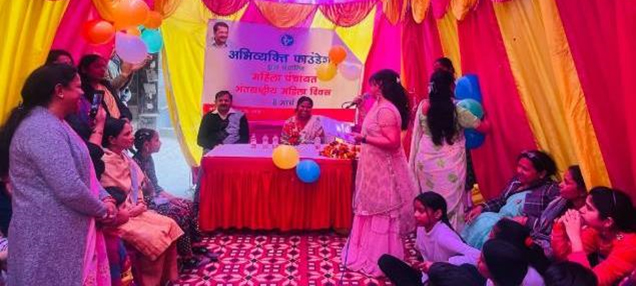
Abhivyakti Foundation, with the unwavering support of the Delhi Commission for Women (DCW), Government of Delhi, implements the Mahila Panchayat Programme in Burari North District of Delhi. This programme is a pioneering initiative in grassroots legal empowerment, designed to give women access to justice, legal aid, counseling, and community-based dispute resolution within their own neighborhoods. By establishing locally trusted forums, the initiative bridges the gap between formal legal institutions and marginalized women who often face social, financial, or systemic barriers to justice.
Programme Overview
The Mahila Panchayat Programme is designed to provide immediate and practical support to women facing legal, domestic, or social challenges. Each Panchayat consists of one coordinator, four community workers, and a network of trained women leaders drawn from the local community. These women undergo comprehensive training covering:
- 1. Laws pertaining to women’s rights, including Protection of Women from Domestic Violence Act (2005), Dowry Prohibition Act (1961), Sexual Harassment of Women at Workplace Act (2013), and other provisions of the Indian Penal Code related to violence, cruelty, dowry deaths, and sexual offenses.
- 2. Dispute resolution techniques to mediate family and community conflicts effectively.
- 3. Empathetic counseling skills to support survivors through crisis situations.
- 4. Case documentation and follow-up to track outcomes and ensure justice.
- 5. Legal procedures, including filing FIRs, engaging with police, and connecting women to legal aid services.
Through this structured approach, Mahila Panchayats have become trusted, sustainable forums for justice, reducing barriers for women who traditionally hesitate to approach formal institutions like police stations or courts.

Programme Objectives
The Mahila Panchayat Programme focuses on five core objectives:
- 1. Combat Violence Against Women: Increase awareness, challenge harmful societal norms, and reduce domestic and social violence.
- 2. Capacity Building: Train grassroots women to become legally aware, gender-sensitive, and effective leaders within their communities.
- 3. Community Conflict Resolution: Provide safe and empathetic forums to address family and neighborhood disputes.
- 4. Legal Empowerment: Prepare women for formal legal action and connect them with professional legal aid when needed.
- 5. Systematic Documentation: Maintain meticulous case follow-ups to assess impact and track trends in community-level justice.
Programme Approach
Legal Awareness
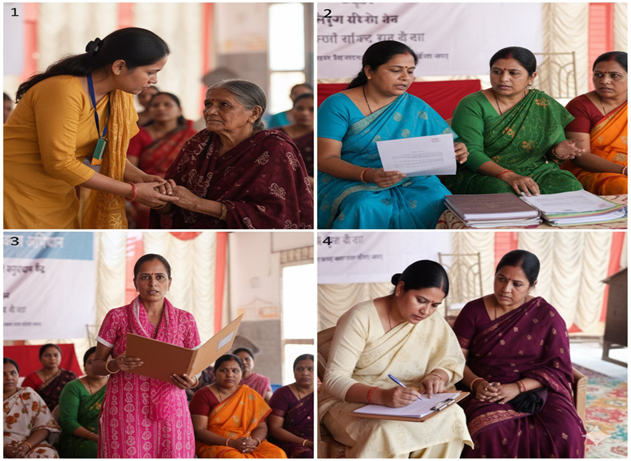
Regular workshops educate women about domestic violence, marriage laws, property rights, workplace harassment, and other crucial legal protections. These sessions aim to strengthen confidence, knowledge, and self-advocacy skills, enabling women to assert their rights effectively.
Dispute Resolution
Trained Panchayat members conduct mediation sessions, allowing both parties to communicate freely. With a focus on non-judgmental guidance, they prioritize women’s safety, dignity, and reconciliation wherever possible.
Self-Defense Training
In collaboration with Delhi University Students Union, practical self-defense workshops equip women and young girls with techniques to protect themselves in high-risk situations, significantly increasing confidence and personal security.
Community Outreach
Panchayat members regularly conduct door-to-door campaigns, community meetings, and awareness drives, spreading knowledge about legal rights, available support systems, and services provided by the Mahila Panchayats. This proactive engagement ensures wider coverage, trust-building, and community-level behavioral change.
Case Statistics & Impact
The Mahila Panchayats have handled cases with remarkable efficiency and outcomes, showcasing the effectiveness of women-led grassroots legal interventions.
| Indicator | Total Cases | Cases Resolved | Cases Referred to DCW | Cases Under Process |
|---|---|---|---|---|
| Every Year | 540 | 258 (48%) | 56 (10%) | 226 (42%) |
Impact Highlights:
- 1. Nearly 48% of cases were successfully resolved at the community level without escalation, reflecting high mediation effectiveness.
- 2. 10% of cases were escalated to the DCW, ensuring serious or complex issues received expert intervention.
- 3. Remaining 42% of cases are under process, demonstrating the Foundation’s commitment to thorough follow-up and sustainable resolution.
- 4. Over 90% of women reported increased awareness of their legal rights, and 85% felt confident to approach Panchayat members in times of need.
- 5. Panchayat interventions have reduced escalation of domestic violence by an estimated 35% in participating communities, based on feedback and monitoring.
Success Stories:
- 1. Sunita, Burari resident: Gained confidence to confront domestic abuse and now supports other women facing similar challenges.
- 2. Priya, Programme Beneficiary: Overcame workplace harassment with Panchayat support and now volunteers to assist other women.
Future Roadmap for Mahila Panchayats
Abhivyakti Foundation aims to expand coverage, enhance training, and integrate technology:
- 1. Advanced Training Modules: Focus on cybercrime, human trafficking, digital safety, and complex legal scenarios.
- 2. Digital Case Management: Introduce tools for faster documentation, real-time tracking, and performance analytics.
- 3. Stronger Institutional Linkages: Build relationships with DCW, police, judiciary, legal aid authorities, and social welfare departments for comprehensive support.
- 4. Community Awareness Drives: Sustain behavior change campaigns to sensitize families and neighborhoods.
- 5. Sustainability: Develop networks of trained women leaders who can independently manage Panchayats, ensuring long-term community ownership.
Crisis Intervention Centre (CIC)
Immediate and Holistic Support for Survivors
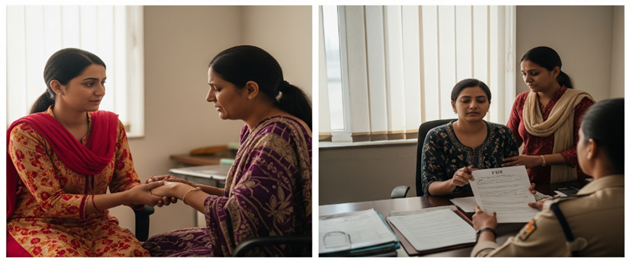
In partnership with Delhi Police and DCW, Abhivyakti Foundation operates the Crisis Intervention Centre (CIC) in North West and Outer Delhi districts. CIC provides victim-centric support for survivors of sexual assault, domestic violence, and torture, ensuring timely access to legal, medical, and psychosocial services.
Key Functions:
- 1. Immediate counseling and psychological support.
- 2. Assistance with FIR registration, medical examination, and investigation follow-up.
- 3. Rehabilitation support including financial assistance, skill development, and welfare scheme linkages.
- 4. Strengthening police and judicial coordination to reduce procedural delays and enhance transparency.
Case Statistics & Impact
| Indicator | Total Cases | Counselling Provided | Medical Support | Legal Assistance | Rehabilitation Support |
|---|---|---|---|---|---|
| Every Year | 528 | 421 (80%) | 196 (37%) | 310 (59%) | 167 (32%) |
Impact Highlights:
- 1. 80% of survivors received timely counseling, reducing psychological trauma.
- 2. 59% of survivors received legal assistance, ensuring timely FIR registration and proper case follow-up.
- 3. 37% accessed medical support, with financial assistance provided when needed.
- 4. 32% benefited from rehabilitation programs, including skill training, livelihood support, and reintegration services.
- 5. The initiative reduced FIR registration delays by over 40%, improving trust in police and legal systems.
Success Stories:
- 1. A 17-year-old girl victim of sexual assault received same-day FIR registration, immediate medical care, and counseling, enabling her family to pursue justice effectively.
- 2. A young domestic worker faced repeated abuse but was assisted through CIC to secure legal action and skill-development training, supporting long-term livelihood recovery.
Future Roadmap for CIC
- 1. Enhanced Capacity Building: Specialized training in trauma-informed care, child protection, and digital safety.
- 2. Digital Integration: Real-time case management for coordination with hospitals, legal services, and police.
- 3. Comprehensive Rehabilitation Packages: Linking survivors with welfare schemes, legal aid, and skill-building programs.
- 4. Awareness Campaigns: Promote reporting of sexual and gender-based violence and reduce societal stigma.
The CIC model represents a replicable, victim-centric approach to addressing gender-based violence in urban India. It ensures survivors receive justice, care, dignity, and long-term empowerment, complementing the work of Mahila Panchayats.
Overall Achievements & Impact:
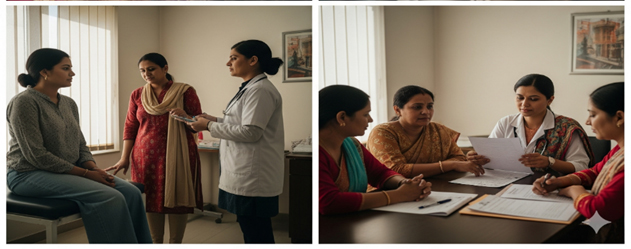
- 1. Mahila Panchayats and CIC combined have supported over 1,000 cases in Delhi in 2024–25, with nearly half resolved successfully at the community level.
- 2. Increased legal awareness and confidence among 90% of beneficiaries, empowering women to navigate legal processes independently.
- 3. Reduction in domestic violence escalation by approximately 35%, as reported by community monitoring.
- 4. Establishment of sustainable, women-led forums capable of long-term conflict resolution and social justice advocacy.
- 5. Strengthened institutional linkages with DCW, police, judiciary, and welfare departments, making legal aid more accessible and efficient.
Through a holistic, multi-tiered approach, Abhivyakti Foundation has created a model of women’s empowerment and justice that is both impactful and scalable, ensuring sustainable change in Delhi’s grassroots communities.