Reviving Heritage, Creating Livelihoods: LEDP on Terracotta Crafts in Palwal
Programme Overview
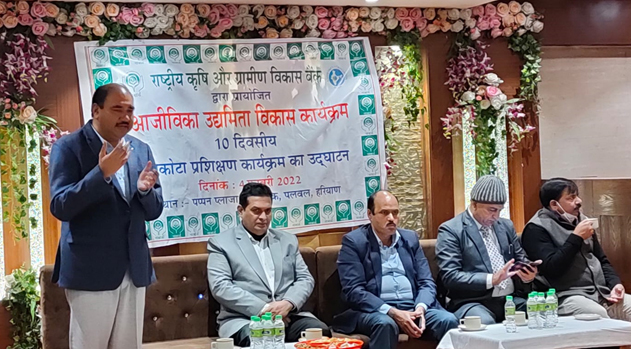
Abhivyakti Foundation, with the invaluable support of NABARD, has successfully completed its transformative Livelihood and Enterprise Development Programme (LEDP) in Palwal district, Haryana, focused on terracotta crafts. This initiative was designed to empower 90 women from Self-Help Groups across three rural clusters – Banchari, Nagla Bheeku, and Aurangabad – by combining the revival of traditional terracotta craftsmanship with modern livelihood creation strategies. The programme recognized the dual challenge of preserving a centuries-old craft while creating tangible economic opportunities for rural women. Through hands-on training, enterprise development, and market linkages, the LEDP has created an environment where traditional artisans can thrive both economically and culturally.
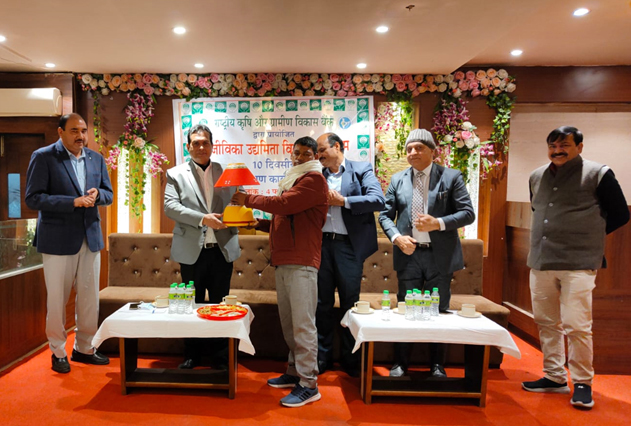
This initiative not only provided participants with technical skills but also instilled confidence, leadership abilities, and entrepreneurial acumen, enabling them to take ownership of their craft, establish small enterprises, and actively participate in shaping their communities’ socio-economic landscape. It represents a holistic model of rural development, bridging cultural heritage, skill development, and income generation.
Training Methodology
The programme was meticulously structured into three progressive phases over six months, ensuring participants developed technical mastery, design sensibility, and entrepreneurial competence.
Foundation Phase (Months 1-2)
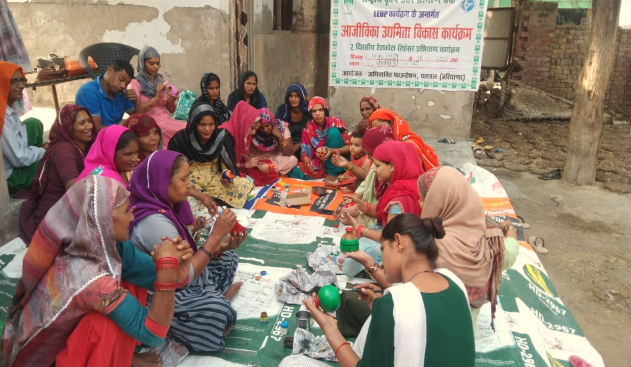
The initial stage focused on building a strong technical foundation in traditional terracotta methods. Participants were trained in selecting high-quality clay, processing it sustainably, and understanding its physical properties to ensure durability and functionality. Basic hand-building techniques such as pinching, coiling, and slab construction were taught alongside the study of local motifs, patterns, and cultural significance. Special attention was given to environmental sustainability through responsible clay harvesting and the use of natural materials, instilling awareness of eco-friendly production practices. This phase emphasized skill immersion and cultural grounding, preparing participants for more complex techniques in the subsequent stages.
Skill Enhancement Phase (Months 3-4)
The second phase focused on enhancing skill sophistication and creative design. Participants learned advanced molding techniques to create complex forms, functional household items, and decorative artifacts. Surface treatments, such as natural polishing, texturing, and traditional glazing, were combined with practical firing methods using improved kiln techniques for uniform quality and durability. Product diversification was a key emphasis, introducing participants to modern design sensibilities while retaining traditional heritage motifs. By the end of this phase, artisans were confidently producing both decorative and functional terracotta products, ready for market-level quality standards.
Enterprise Development Phase (Months 5-6)
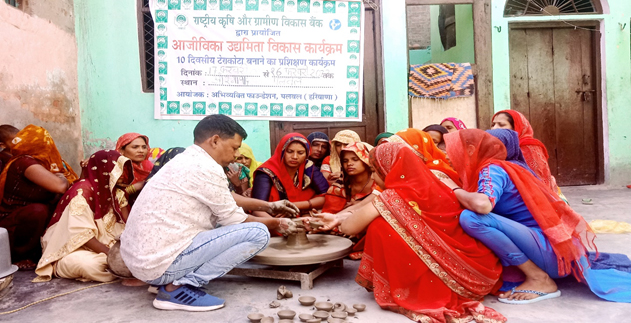
The final phase bridged craftsmanship with business and marketing expertise, ensuring participants could sustainably monetize their skills. Training included calculating production costs, setting competitive prices, storytelling for heritage marketing, and collective enterprise management, including group production planning, order fulfillment, and procurement. Additionally, participants were introduced to e-commerce, digital product cataloging, and online marketplaces, equipping them to reach wider audiences beyond their villages. This phase ensured that participants had not only technical expertise but also the strategic understanding of enterprise operations, making the programme truly livelihood-oriented.
Skills Mastered
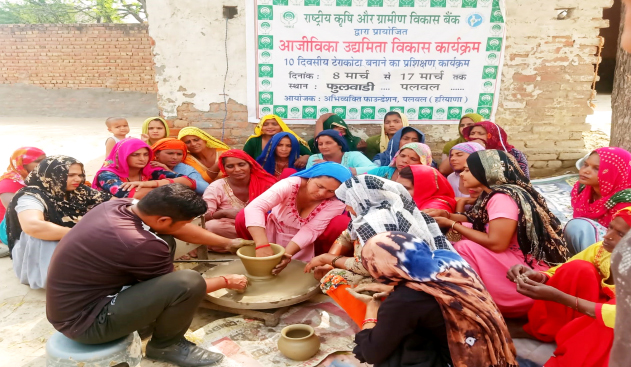
The LEDP produced artisans with comprehensive, market-ready skills:
- • Clay preparation and conditioning: Understanding soil types, moisture content, and working properties
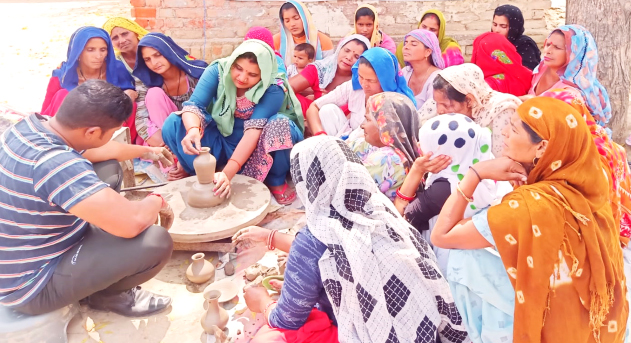
- • Hand-building methods: Pinching, coiling, slab building, and wheel-throwing for circular forms
- • Surface decoration: Impressed designs, appliqué, incised motifs, and lattice work
- • Natural glazing and finishing: Polishing, burnishing, and sustainable natural pigments
- • Safe firing practices: Efficient kiln operation, fuel optimization, and consistent firing results
- • Design adaptation: Balancing traditional motifs with contemporary consumer preferences
- • Enterprise skills: Product costing, pricing strategies, and inventory management
- • Marketing & sales: Product photography, packaging, storytelling, and digital sales strategies
By mastering these skills, participants were able to independently produce high-quality, culturally authentic terracotta products while developing the confidence to manage small-scale enterprises.
Market Linkages Established
To ensure the products generated consistent income, the programme established strong connections with multiple market channels:
- • Home décor retailers: Artisans’ products are now featured in specialty shops across Delhi NCR and Gurugram, positioning them within high-value urban markets
- • Tourism and cultural outlets: Partnerships with Haryana tourism gift shops showcased traditional terracotta to visitors, enhancing cultural visibility
- • Exhibition circuits: Regular participation in regional craft bazaars and heritage exhibitions provided exposure and networking opportunities for large-volume sales
- • Interior designers: Collaborations allowed artisans to supply customized terracotta elements for urban and corporate spaces
- • Online marketplaces: E-commerce storefronts expanded reach, enabling artisans to sell directly to national and international consumers
These market linkages have led to significant and measurable income growth, with more than 85% of trained artisans selling their products consistently within three months of programme completion.
Success Story: Rajni Devi – A Model Artisan
Rediscovering Cultural Roots
Rajni Devi, 38, from Banchari, represents the transformative potential of the LEDP. Her grandmother had mastered terracotta storage vessels, but the knowledge had skipped a generation. Rajni’s participation in the programme allowed her to reconnect with her family heritage, transforming latent skills into marketable expertise.
From Novice to Expert
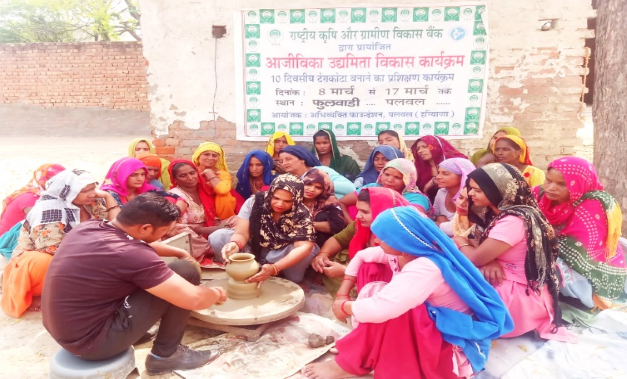
Rajni started as a beginner, facing challenges in clay consistency and basic forms. With guidance from master trainer Madan ji, she quickly learned to turn mistakes into lessons, ultimately mastering advanced techniques. By the third month, she was creating signature terracotta planters with intricate lattice designs, blending tradition with modern aesthetics for urban households.
Economic Empowerment
Rajni’s breakthrough came with an order of 50 custom planters worth ₹17,500 during a Gurugram craft exhibition. Today, she earns ₹12,000 monthly, trains her daughters, and operates a family enterprise. Her husband assists in clay preparation and firing, exemplifying inclusive, family-centered livelihood growth.
Community Leadership
Rajni’s impact extends beyond personal success:
- • Leads a 12-member production collective specializing in diverse terracotta products
- • Developed the collective brand “Mitti Kala”, recognized for quality and authenticity
- • Conducts workshops for over 300 schoolchildren, ensuring skill preservation
- • Established a community museum, showcasing traditional terracotta forms
Her journey demonstrates the LEDP’s broader impact on empowerment, cultural preservation, and community leadership.
Programme Achievements & Impact
The LEDP achieved exceptional outcomes across skill development, economic empowerment, market access, and cultural revival:
- • Income Generation: Average monthly income of ₹5,000–12,000, with some artisans experiencing a 50–60% increase from pre-training earnings
- • Production Output: Over 12,000 terracotta items created during training
- • Market Penetration: Products are now available in 22 retail outlets and 3 online platforms, increasing visibility and sales opportunities
- • Group Enterprise Formation: 4 producer groups established with formal banking relationships, enabling collective growth and financial management
- • Heritage Preservation: Documentation of 35 traditional terracotta forms ensures continuity of indigenous craft knowledge
- • Environmental Sustainability: 100% use of natural materials and zero chemical inputs promotes eco-friendly practices
- • Skill Mastery: 90% of participants now independently create market-ready products
- • Market Competitiveness: 80% of artisans sell outside their villages, integrating into urban and digital markets
These achievements reflect sustainable livelihood creation, cultural revival, and socio-economic empowerment, demonstrating the programme’s long-term impact.
| Impact Area | Details & Achievements | Quantitative Outcome / Percentage |
|---|---|---|
| Skill Development | Participants mastered clay preparation, hand-building, wheel throwing, surface decoration, natural glazing, costing, pricing, marketing, and digital sales. | 90% of 90 participants achieved proficiency in both craft and enterprise skills. |
| Production & Quality | Creation of functional and decorative terracotta items with market-ready standards. | Over 12,000 items produced; 95% meet market-quality standards; avg. 140–150 items per artisan per month. |
| Income & Economic Empowerment | Women artisans increased household income through consistent product sales, exhibitions, and online platforms. | Avg. monthly income ₹5,000–12,000; 60% saw 50–60% income increase; highest earners ₹12,000+. |
| Market Access & Linkages | Access to retail shops, online platforms, craft exhibitions, interior designers, and tourism outlets. | Products sold in 22 retail outlets, 3 online platforms; 80–85% artisans selling beyond villages. |
| Group Enterprise & Community Leadership | Formation of producer groups, brand development, mentoring, and community engagement. | 4 producer groups formed; brand “Mitti Kala”; artisans mentor 12–15 peers; workshops conducted for 300+ schoolchildren. |
| Heritage Preservation & Cultural Continuity | Documentation, digital archiving, and innovation in traditional terracotta forms. | 35 traditional terracotta forms documented and preserved; artisans innovating modern adaptations. |
| Environmental Sustainability | Emphasis on natural materials and eco-friendly production processes. | 100% natural materials; zero chemical inputs; sustainable clay harvesting. |
Continuing Support System
To ensure continued success and growth, Abhivyakti Foundation has implemented:
- • Dedicated display space at the district handicraft emporium for consistent visibility and sales
- • Quarterly skill enhancement workshops to update design techniques and refine production quality
- • Technical guidance for kiln efficiency and fuel optimization
- • Digital documentation and archiving of traditional motifs and patterns
- • Facilitation of government schemes to support artisans’ access to grants, subsidies, and promotion platforms
This ongoing support ensures that the LEDP’s benefits are sustainable, scalable, and long-lasting, supporting both economic growth and cultural preservation.
Collaboration Partners
The programme’s success was made possible through strong partnerships with:
- • NABARD: Financial support and technical guidance
- • District Industries Centre, Palwal: Administrative and marketing support
- • Master craftspeople from Haryana State Handicrafts Department: Technical expertise and mentorship
- • Local community leaders: Mobilization, skill documentation, and community engagement
Conclusion
The Terracotta LEDP in Palwal stands as a model of holistic rural development, demonstrating how traditional crafts can be transformed into sustainable livelihoods. By integrating skill development, enterprise management, market linkages, and cultural preservation, Abhivyakti Foundation has empowered women artisans to achieve economic independence, community leadership, and cultural continuity. This initiative proves that heritage crafts, when supported with structured training, innovation, and strategic marketing, can thrive in contemporary markets and create lasting socio-economic impact.