Care & Support Centre – Delhi
A Lifeline of Hope, Dignity, and Empowerment for People Living with HIV/AIDS
The Abhivyakti Foundation, a leading non-profit working for holistic human development and social inclusion, operates the Care & Support Centre (CSC) in Delhi with the mission of ensuring that every Person Living with HIV/AIDS (PLHIV) and Child Affected by AIDS (CABA) receives dignified care, medical support, and opportunities for self-reliance. The Centre functions under the aegis of the National AIDS Control Organisation (NACO) and the Delhi State AIDS Control Society (DSACS), with technical guidance from HLFPPT and YRG Care, two nationally recognized leaders in HIV prevention and management.
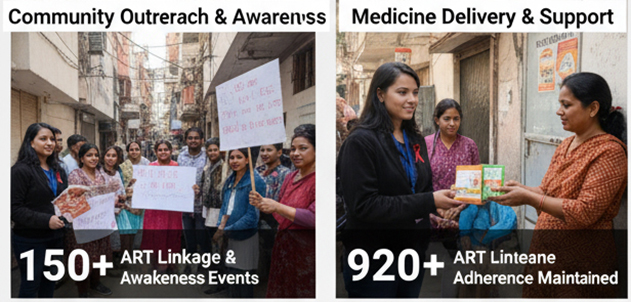
The Delhi CSC stands as a symbol of compassion, efficiency, and empowerment. It focuses not only on disease management but also on restoring self-worth, social dignity, and livelihood security for every beneficiary. The program’s foundation lies in a holistic approach—addressing medical, emotional, psychological, and economic dimensions of care—to help individuals live productive and stigma-free lives.
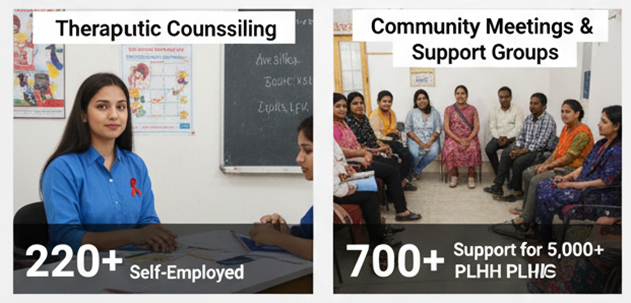
Holistic Approach and Programme Reach
Since its inception, the Delhi Care & Support Centre has reached out to over 5,000 People Living with HIV/AIDS and more than 1,200 Children Affected by AIDS across different parts of Delhi. Through dedicated counseling, home visits, and referral linkages, the Centre has successfully ensured that 98% of registered beneficiaries are linked with ART (Antiretroviral Therapy) and receive consistent follow-up for treatment adherence.
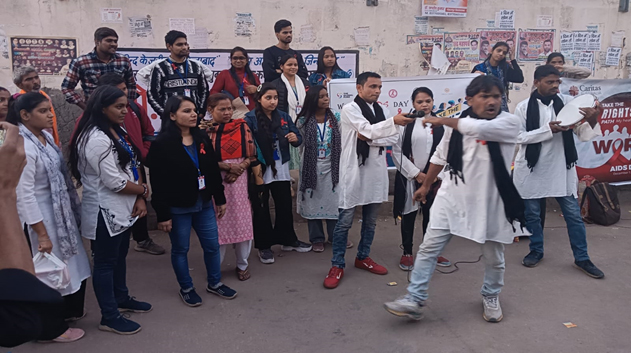
The Centre’s sustained outreach efforts have resulted in 92% adherence to ART, one of the highest among urban CSCs in North India. Regular health monitoring, family counseling, and nutrition support have collectively improved the health and quality of life of beneficiaries, reducing opportunistic infections by nearly 40% in the last two years.
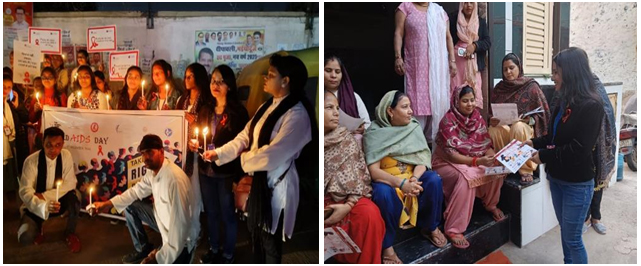
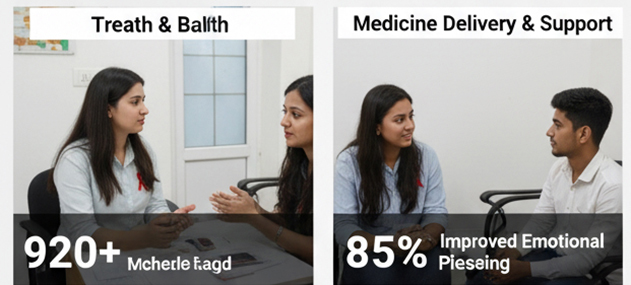
Moreover, the Centre’s focus on psychosocial well-being has led to a remarkable 85% reduction in reported cases of depression and anxiety among registered clients, measured through periodic mental health assessments and follow-up counseling sessions.
The CSC also emphasizes child welfare and education. Through school linkages and educational sponsorships, over 700 children have continued their schooling despite family hardships, ensuring that the next generation is not deprived of learning and opportunity.
Impact on Health and Treatment Adherence
A primary indicator of success at the Delhi CSC has been its achievement in treatment adherence and retention in care. As of this reporting year, 98% of the registered PLHIV are actively enrolled in ART centres, and 92% maintain consistent adherence, resulting in improved viral suppression and overall immunity.
Through continuous follow-up, home-based visits, and counseling, the Centre has drastically reduced default rates, ensuring that beneficiaries stay connected with treatment services even during times of crisis. The incorporation of peer educators—individuals who are themselves living with HIV—has proven transformational, as they have become trusted motivators for others facing similar struggles.
In collaboration with DSACS and local ART centres, periodic health camps have been conducted to screen for opportunistic infections and comorbidities such as tuberculosis, hepatitis, and anemia. The Centre has facilitated access to diagnostic tests and hospital referrals, ensuring that each beneficiary receives timely and affordable medical care.
Nutritional support initiatives have further strengthened health outcomes. Each month, over 150 nutritionally vulnerable individuals receive dry ration kits and counseling on dietary improvement, directly contributing to increased strength, immunity, and treatment response.
Psychosocial Empowerment and Emotional Healing
Beyond medicine, the CSC’s true transformation lies in its psychosocial interventions. Living with HIV often leads to isolation, shame, and internalized stigma. The Delhi CSC addresses this through therapeutic counseling, family dialogue, and peer-group healing sessions.
Through regular one-on-one counseling, 85% of beneficiaries have shown measurable improvement in emotional stability and coping skills. Family acceptance has improved significantly, with 72% of clients reporting stronger family support networks compared to baseline.
The Centre has developed a Peer-Led Support Group Model, where trained peers facilitate group meetings, discussions, and awareness sessions. These sessions have not only reduced feelings of loneliness but also improved treatment compliance and self-esteem.
Beneficiaries often describe the Centre as a “second home”—a place of safety, warmth, and hope where they are accepted without judgment. This trust-based environment has been instrumental in rebuilding confidence and restoring social participation among PLHIV and their families.
Livelihood and Economic Rehabilitation
Recognizing that long-term rehabilitation requires economic stability, the Delhi CSC integrates livelihood development and skill training into its support framework. The Centre organizes vocational training programs in tailoring, beauty care, handicraft production, and small-scale entrepreneurship for women and youth affected by HIV/AIDS.
So far, nearly 350 beneficiaries have completed livelihood training, and over 220 individuals (63%) have established income-generating activities or secured part-time employment in small industries and service sectors.
The Centre has also facilitated linkages with government welfare schemes, microcredit programs, and self-help groups to support entrepreneurship. Many beneficiaries have started small tailoring units, home-based tiffin services, or beauty parlors, achieving financial independence and dignity.
Through sustained guidance and mentorship, several PLHIV households now report a monthly income increase of 25–40%, enabling better nutrition, children’s education, and healthcare access.
Social Protection and Rights Facilitation
One of the key successes of the Delhi CSC has been its social protection drive, ensuring that every beneficiary is connected with government welfare schemes.
Over the past year, the Centre has facilitated linkages to more than 1,000 social protection benefits—including widow pensions, disability allowances, ration cards, Ayushman Bharat health insurance, and school scholarships. Documentation assistance (Aadhaar, PAN, and voter ID) has enabled beneficiaries to access mainstream welfare services without discrimination.
The CSC has also supported legal aid and grievance redressal, helping individuals facing eviction, workplace discrimination, or denial of healthcare. These interventions have not only secured rights but also built confidence and self-advocacy among PLHIV.
Community Awareness and Stigma Reduction
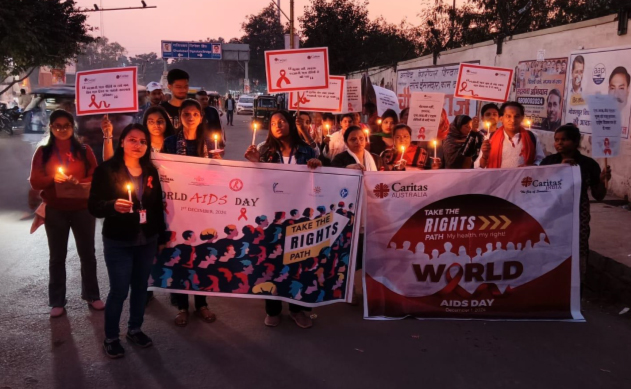
The Delhi CSC has implemented over 150 community awareness events, reaching nearly 20,000 people across Delhi with messages on HIV prevention, stigma reduction, and rights awareness.
Through community dialogues, street plays, health rallies, and IEC campaigns, the program has improved understanding and acceptance of PLHIV, particularly among healthcare workers, employers, and local leaders. Surveys conducted by the Centre indicate a 60% increase in positive attitudes towards PLHIV within the communities engaged over the last two years.
These awareness programs have created an enabling environment where individuals now come forward for voluntary testing and counseling, breaking the silence around HIV.
Key Achievements at a Glance
In the last two years, the Delhi Care & Support Centre has achieved the following milestones:
- 98% linkage to ART and 92% adherence maintained consistently.
- 5,000+ PLHIV and 1,200+ CABA reached with holistic care and counseling.
- 85% beneficiaries reported improved emotional well-being.
- 700+ children supported to continue education.
- 1,000+ social protection linkages ensured.
- 220+ individuals successfully employed or self-employed.
- 40% reduction in opportunistic infections among regular beneficiaries.
- 20,000+ people reached through stigma reduction campaigns.
These numbers reflect not only the program’s reach but also its depth of impact—restoring dignity, hope, and livelihood to thousands of marginalized individuals.
Innovations and Best Practices Adopted
To enhance program effectiveness, several innovative practices have been integrated into the Delhi CSC model:
- 1. Peer-Led Case Management: The use of trained peer educators has improved treatment adherence by over 15% and enhanced community participation.
- 2. Family-Centered Care Approach: Inclusion of family members in counseling sessions has strengthened acceptance and long-term support for PLHIV.
- 3. Mobile Follow-Up and Digital Record System: A structured follow-up through digital record keeping and phone-based reminders has reduced ART default cases.
- 4. Livelihood and Social Protection Convergence: Integration of health, social protection, and economic components under one program has ensured holistic rehabilitation.
- 5. Community Advocacy Networks: The establishment of PLHIV-led community groups has enabled local advocacy, reduced stigma, and improved self-representation.
Voices of Change
“Before coming to the Centre, I felt invisible. Today, I counsel others like me. The support I received gave me courage and purpose.”
— Peer Educator, CSC Delhi
“I never imagined our family would stand together again. The Centre not only gave my husband treatment but restored our dignity.”
— Spouse of Beneficiary
Contact Us
If you or someone you know needs support, or if you wish to partner with us in this important work, please contact our Delhi Care & Support Centre: