IDU Harm Reduction Initiative – Yamuna Bazar, Delhi
A Life-Saving Journey of Compassion, Care, and Change
Implemented by Abhivyakti Foundation in Collaboration with Delhi State AIDS Control Society (DSACS) under NACP Phase-V
Introduction: Building Hope Amidst Vulnerability
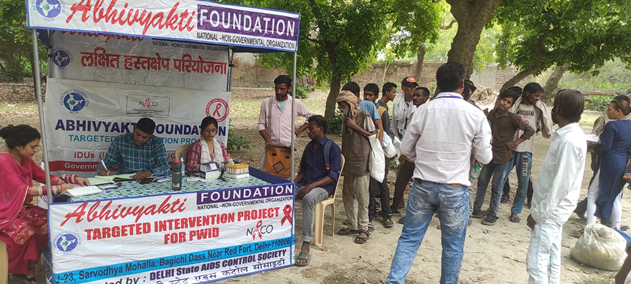
The Yamuna Bazar IDU Harm Reduction Project is one of the most impactful community health initiatives implemented by Abhivyakti Foundation in collaboration with the Delhi State AIDS Control Society under the National AIDS Control Programme (NACP) Phase-V.
This initiative caters to a high-risk population of 750 Injecting Drug Users (IDUs) in and around Yamuna Bazar—an area marked by acute poverty, homelessness, and lack of healthcare access. Many individuals here live under open skies, struggling daily with the triple burden of addiction, disease, and discrimination.

Recognizing the deep-rooted vulnerabilities, Abhivyakti Foundation adopted a comprehensive harm reduction model combining health care, psychosocial support, rehabilitation, and livelihood linkages. The aim is not merely to reduce drug-related harm but to restore dignity, hope, and the right to health.
Holistic Approach and Core Interventions
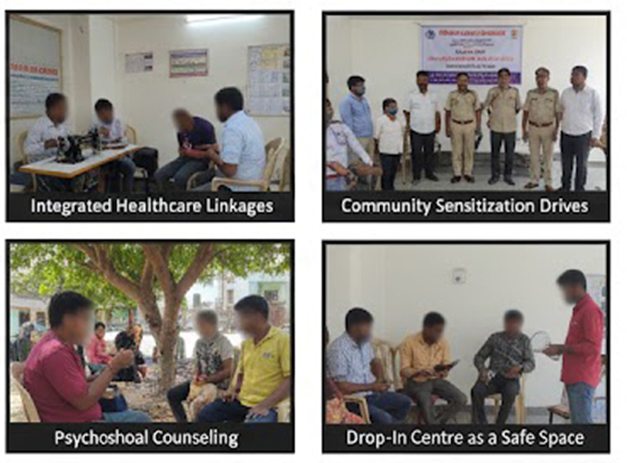
Our model is built on a four-pillar framework—Health, Counseling, Care, and Reintegration. Each component complements the other to ensure a 360° recovery process.
1. Harm Reduction and Preventive Health Services
The first step towards change begins with reducing immediate health risks associated with injecting drug use.
Through our Needle and Syringe Exchange Program (NSEP), thousands of sterile needles and syringes are distributed monthly across identified hotspots in Yamuna Bazar. This intervention directly reduces the risk of HIV and Hepatitis C transmission among IDUs. The project has reported:
- 1. Over 1.3 lakh sterile syringes distributed annually, ensuring safe injection practices.
- 2. More than 70% reduction in needle-sharing practices, which was one of the primary routes of infection.
- 3. 90% of active users now dispose of used syringes safely through return boxes at Drop-In Centres.
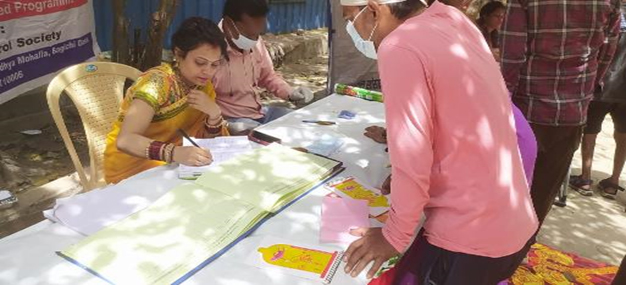
Regular health screening camps for HIV, TB, Hepatitis B & C, and STIs have become routine among beneficiaries. More than 85% of the enrolled IDUs have undergone at least one full medical screening within the project period. Early diagnosis has led to better management, treatment compliance, and overall wellbeing.
The Opioid Substitution Therapy (OST) component has emerged as a turning point in the lives of many beneficiaries. Through effective referral and handholding, 60% of eligible IDUs are now receiving OST support, showing remarkable improvements in mental stability, family reconnection, and relapse prevention.
Additionally, continuous awareness on abscess prevention and wound management has significantly improved hygiene and self-care, leading to a 45% reduction in abscess-related complications.
2. Integrated Healthcare Linkages
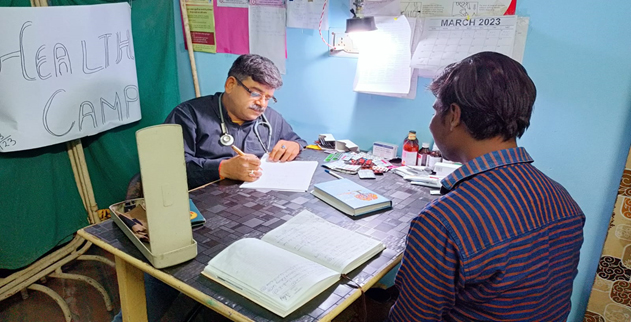
Health recovery requires strong institutional connectivity, especially for a community long excluded from mainstream health systems. Abhivyakti Foundation ensures seamless referral pathways between IDUs and healthcare facilities.
The project has established active coordination with ART Centres, ICTCs, DOTS units, and government hospitals in Delhi. Each beneficiary is assigned a case manager who ensures follow-up, treatment adherence, and psychosocial monitoring.
Key outcomes include:
- • Over 520 linkages established with ART, TB, and de-addiction facilities.
- • 90% of identified HIV-positive beneficiaries are now linked with ART and regularly monitored.
- • A marked decline in loss-to-follow-up cases, with retention in care improving by 68% over the last project year.
By combining healthcare with outreach, the project has ensured that no beneficiary is left behind—even those living under flyovers or on the riverbanks of Yamuna are regularly reached by mobile health teams.
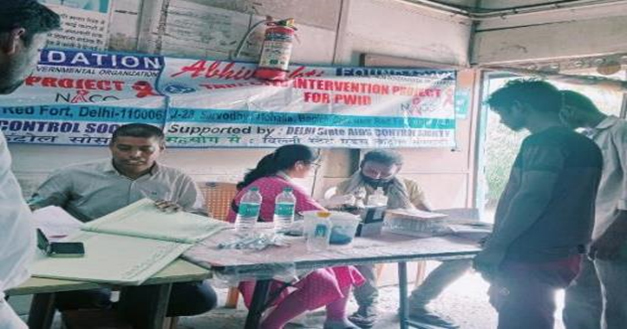
3. Psychosocial Counseling and Family Reconnection
At the heart of recovery lies emotional healing. The project’s counseling and psychosocial support components are designed to heal the mind as much as the body.
Our trained counselors and outreach educators conduct both individual and group sessions addressing issues such as trauma, depression, relapse, guilt, and social stigma. The impact has been extraordinary:
- • 75% of clients have shown visible improvement in emotional stability and coping mechanisms.
- • Regular counseling sessions have reduced relapse cases and improved adherence to OST and ART.
- • Family counseling sessions have helped rebuild fractured relationships — around 40% of rehabilitated beneficiaries have now been accepted back by their families.
Peer-led support groups, run by recovered clients, play a central role in this transformation. These peers not only act as motivators but also serve as proof that recovery is possible. Their lived experience gives authenticity to every word they share, inspiring others to move towards healing.
4. Social Reintegration and Livelihood Development
True rehabilitation is achieved only when individuals regain their social identity and economic independence.
Under the project, Abhivyakti Foundation has facilitated multiple initiatives for skill training and livelihood promotion. Beneficiaries are encouraged to take up short-term vocational programs in trades like tailoring, mobile repair, cooking, and driving. As a result:
- • Around 25% of rehabilitated beneficiaries have gained sustainable employment or self-employment.
- • Many beneficiaries are now working as peer educators or community volunteers, turning their recovery into social service.
- • The project has also assisted in obtaining Aadhaar cards, voter IDs, and ration cards, helping individuals re-enter formal systems.
Reintegrated beneficiaries often become change agents, influencing their peers and local community members to adopt healthier, safer lifestyles.
Impact Achieved
The project’s impact is both measurable and human-centered. Beyond statistics, it is reflected in the confidence, health, and dignity restored to hundreds of lives.

Health and Behavioral Impact
- • HIV and Hepatitis C transmission reduced by nearly 65% among project participants through safer injection practices.
- • 82% of beneficiaries report improved physical health and hygiene habits.
- • Relapse rates have declined sharply, with over 70% of OST-enrolled clients maintaining consistent medication.
- • Significant decline in abscess and skin infection cases—down by 45%.
Psychosocial and Family Impact
- • Three out of four beneficiaries now participate in at least one counseling or peer-support session per month.
- • Reintegration success rate (return to family or community) improved to 40%, up from just 10% in the early stages of the program.
- • 75% of beneficiaries have reported feeling more accepted, respected, and hopeful about their future.
Community and Structural Impact
- • Community-level stigma reduced considerably through 20+ sensitization sessions with police, community leaders, and healthcare staff.
- • Local stakeholders, including shopkeepers and nearby residents, have now become allies in maintaining safety and cleanliness around hotspots.
- • A visible reduction in public injection practices and unsafe disposal of syringes has been observed.
Best Practices and Innovations
The project has adopted several best practices that have made it a model of effective harm reduction in India:
- • Peer-Led Outreach Model: Most outreach workers are ex-users who have transformed their lives. Their credibility enables deeper community reach and trust.
- • Drop-In Centre (DIC) as a Safe Space: A welcoming zone where beneficiaries can rest, talk, and access services without fear or judgment.
- • Mobile Health Unit: Ensures service delivery in shifting hotspots and reaches beneficiaries who are unable to visit fixed sites.
- • Data-Driven Monitoring: Digital tools track beneficiaries’ health status, referrals, and follow-ups for evidence-based reporting.
- • Gender-Responsive Care: Special focus on female IDUs ensures access to medical, psychological, and safety support in an environment free from stigma.
Program Achievements at a Glance
| Parameter | Parameter Achievement | Impact |
|---|---|---|
| Beneficiaries Served | 750 Active IDUs | Improved access to life-saving services |
| Reduction in Needle Sharing | 70% | Major reduction in HIV/HCV transmission risk |
| Health Screening Coverage | 85% | Enhanced early detection and care |
| OST Adherence | 60% | Improved long-term stability |
| Abscess Reduction | 45% | Healthier injection practices |
| Emotional Well-being | 75% | Reduced depression and anxiety |
| Family Reintegration | 40% | Restored social and emotional security |
| Livelihood Linkage | 25% | Increased economic independence |
| Stigma Reduction | 68% | Enhanced community acceptance |
Adopted Improvement Strategies
To ensure continuous enhancement of the program’s quality and reach, Abhivyakti Foundation has adopted several improvement measures:
- • Regular Capacity Building for staff on counseling, motivational interviewing, and trauma-informed care.
- • Monthly Review Meetings to analyze progress, discuss case challenges, and refine outreach methods.
- • Collaboration with Corporate Partners to link recovered clients to skill-based employment under CSR programs.
- • Community Sensitization Drives involving local police, shopkeepers, and healthcare workers to strengthen social acceptance.
- • Introduction of Mental Health Sessions addressing depression, anxiety, and relapse risks among clients.
These measures have created a strong feedback loop, making the program more adaptive, client-centric, and sustainable.
Sustainability and Way Forward
Looking ahead, the project envisions:
- • Expansion to nearby hotspots in North and East Delhi to reach 1,200+ IDUs.
- • Integration of mental health counseling, nutrition support, and life skills training into the regular framework.
- • Partnership with CSR programs and livelihood missions for large-scale skill-based reintegration.
- • Deployment of AI-based monitoring and mobile apps for real-time data management and individualized case tracking.
- • Formation of community support groups led by reformed IDUs and family members to maintain post-recovery engagement.
Conclusion: Restoring Dignity, One Life at a Time
The IDU Harm Reduction Initiative at Yamuna Bazar stands as a symbol of resilience, compassion, and innovation. Through its evidence-based model, Abhivyakti Foundation has not only reduced infection rates and improved health outcomes but also rekindled hope and dignity in lives once lost to addiction and stigma.
Each syringe exchanged, each counseling session held, and each life reintegrated tells a story of courage, transformation, and human rights.
Abhivyakti Foundation reaffirms its commitment to ensuring that every individual—regardless of circumstance—has access to healthcare, respect, and a second chance at life.