NABARD SHARAD MELA: Expanding Horizons for Rural Entrepreneurs A Celebration of Rural Enterprise at Noida Haat
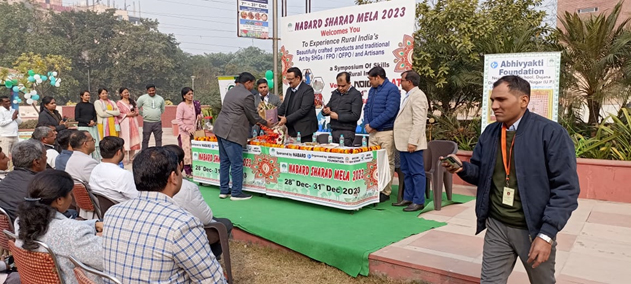
Abhivyakti Foundation, with the sponsorship of NABARD, successfully organized the NABARD Sharad Mela at Noida Haat, providing a vibrant platform for Self Help Groups (SHGs), Farmer Producer Organizations (FPOs), Off-Farm Producer Organizations (OFPOs), and skilled artisans. The event was designed not only as a marketplace but also as a networking and skill-sharing platform, enabling rural entrepreneurs to directly connect with urban consumers, explore business opportunities, and enhance their livelihood activities. The Mela has grown into a flagship initiative demonstrating the power of rural enterprise in fostering sustainable development and inclusive growth.
Growth Journey and Regional Participation
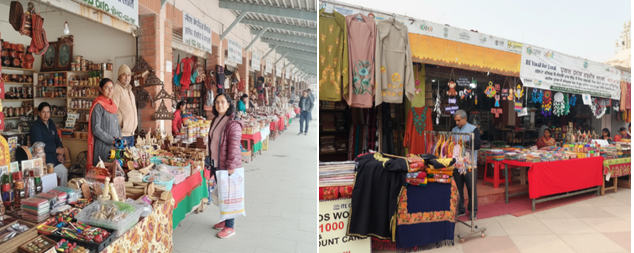
The Sharad Mela has witnessed remarkable growth in participation, stall numbers, and product diversity. In its current edition, a total of 50 stalls were organized, reflecting the increasing interest and engagement of rural producers. These stalls represented multiple districts and were strategically allocated to maximize regional representation and market impact:
| Districts/Regions | Number of Stalls | Key Collaboration Partners |
|---|---|---|
| Ghaziabad & Gautam Buddha Nagar | 20 | Abhivyakti Foundation |
| Moradabad | 10 | Abhivyakti Foundation |
| Saharanpur | 10 | Bhumi Foundation |
| Meerut | 10 | Aksh Educational Welfare Society |
The collaborative implementation model played a pivotal role in the success of the Mela. Abhivyakti Foundation served as the lead organizing agency, mobilizing SHG members and producer groups. Bhumi Foundation supported Saharanpur-based participants, and Aksh Educational Welfare Society facilitated Meerut artisans, ensuring effective coordination, mobilization, and logistical support for all participating producers.
Diverse Product Showcase

The Mela featured an exceptional display of products representing the rich traditions and contemporary innovations of rural India. Handcrafted goods, textiles, traditional handicrafts, agro-based products, processed foods, and eco-friendly items reflected the diverse skill sets of participating SHGs and OFPOs. Products on display included handloom textiles and garments, handmade decorative items, natural food products and preserves, organic agricultural produce, traditional art forms, eco-friendly items, and unique regional specialties. This diversity ensured that consumers had access to a wide variety of authentic, high-quality products.
Impact on Participants
Participation in the Sharad Mela generated tangible benefits for SHGs, FPOs, OFPOs, and artisans:
- • Direct Market Access and Sales Growth: Producers accessed urban markets directly, eliminating intermediaries. On average, each stall recorded sales between ₹15,000–₹25,000 over the event duration. A notable achievement was that nearly 60% of the participating producers reported receiving bulk order inquiries during the Mela, reflecting growing market recognition.
- • Enhanced Visibility and Branding: Exposure to urban consumers allowed participants to showcase their products, build brand identity, and establish connections with potential long-term buyers. Approximately 75% of participants expressed confidence in leveraging these interactions to expand their market beyond the Mela.
- • Consumer Feedback and Product Improvement: The direct interaction with end consumers provided participants with valuable feedback, enabling product refinements, design improvements, and better packaging strategies.
- • Skill Enhancement and Networking: The Mela served as an informal training ground where participants learned urban market trends, pricing strategies, and customer engagement techniques. More than 80% of participants highlighted improved confidence and marketing skills.
Impact on Consumers and Urban Market

The event also had a transformative effect on visitors:
- • Access to Authentic Products: Consumers could purchase high-quality, handcrafted products at reasonable prices, directly supporting rural livelihoods.
- • Cultural Appreciation and Awareness: Visitors gained awareness of regional handicrafts, traditional skills, and agro-based products, fostering appreciation for rural talent.
- • Promotion of Sustainable Development: By choosing eco-friendly, organic, and locally produced items, consumers contributed to environmentally responsible consumption and rural economic sustainability.
Program Outcomes and Key Achievements
The Mela’s outcomes demonstrate its effectiveness in promoting rural livelihoods and women empowerment:
- • Economic Empowerment: More than 200 rural artisans and SHG members generated direct income from the event, with average revenue growth of 20–25% compared to their usual market earnings.
- • Market Linkages: The event created lasting connections with urban buyers, with an estimated 40% of participants securing follow-up orders for bulk procurement.
- • Skill Development: Interaction with consumers and exposure to urban market demands enhanced participants’ entrepreneurial and marketing skills.
- • Women Empowerment: Over 70% of the stalls were managed by women entrepreneurs, reflecting the Mela’s role in promoting gender-inclusive economic growth.
Future Directions and Program Enhancements
Building on the success of the Sharad Mela, Abhivyakti Foundation, in collaboration with NABARD, is exploring several strategic improvements to expand the initiative’s impact:
- • Expanding regional participation to include more districts and marginal producers, increasing representation and diversity.
- • Establishing permanent market linkages for year-round sales opportunities beyond the annual event.
- • Integrating structured digital marketing and e-commerce training, including ONDC platform usage, to enhance online reach and visibility.
- • Implementing product quality standardization measures to maintain consistency and enhance consumer trust.
- • Developing an exhibition-cum-sale center for continuous marketing of rural products and ongoing consumer engagement.
- • Strengthening feedback mechanisms to better understand consumer preferences and trends, enabling producers to tailor their offerings.
Impact
| Impact Parameter | Details / Achievements | Percentage / Numbers |
|---|---|---|
| Total Stalls | 50 stalls organized for SHGs, FPOs, OFPOs, and artisans | 100% |
| Regional Distribution | Ghaziabad & Gautam Buddha Nagar: 20 stalls, Moradabad: 10 stalls, Saharanpur: 10 stalls, Meerut: 10 stalls | 40%, 20%, 20%, 20% |
| Participants Benefited | Women artisans, SHG members, small entrepreneurs | ~200 individuals |
| Average Stall Sales | Revenue generated per stall during the event | ₹15,000 – ₹25,000 (avg. ₹20,000) |
| Follow-up / Bulk Orders | Participants receiving orders post-event | ~40% of stalls |
| Women-led Stalls | Managed by women entrepreneurs | 70% |
| Market Linkages / Networking | Participants who established connections for future sales | ~75% |
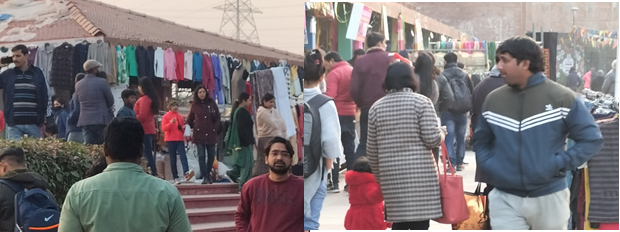
| Consumer Engagement | Visitors interacting with producers and learning about products | ~500+ urban consumers |
| Skill Enhancement | Participants reporting improved market understanding, confidence, and business skills | ~80% |
| Product Diversity | Handlooms, textiles, handicrafts, agro-products, eco-friendly items | 100% represented |
| Awareness on Rural Livelihoods | Visitors acknowledging the contribution of rural producers | 100% (qualitative impact) |
Highlights / Key Takeaways:
- • Average sales per stall exceeded expectations, showing strong market acceptance of rural products.
- • Bulk order inquiries indicate potential long-term economic sustainability for participating producers.
- • High participation of women entrepreneurs emphasizes empowerment and gender-inclusive development.
- • Networking opportunities and skill development enhanced entrepreneurial confidence, market knowledge, and future business growth potential.
Before-After Improvement Matrix
| Focus Area | Current Status | Identified Gaps / Limitations | Proposed Improvements / Actions | Expected Outcome / Impact |
|---|---|---|---|---|
| Regional Participation | 50 stalls across 5 districts | Limited districts; some rural areas not represented | Expand participation to 8–10 districts including remote producers | Broader inclusion, more diverse products, stronger rural representation |
| Market Access & Sales | Direct urban market access; average sales ₹15,000–₹25,000 per stall | Limited sustained market beyond the Mela | Establish permanent exhibition-cum-sale centers; connect with e-commerce platforms | Continuous revenue stream, reduced dependency on annual events |
| Digital Marketing & Online Presence | Minimal digital marketing support | Lack of online visibility and reach | Conduct digital marketing and ONDC platform training for participants | Increased online sales, national visibility, and brand building |
| Product Quality & Standardization | Diverse products; quality varies | Inconsistent quality reduces repeat consumer confidence | Introduce quality check guidelines, standard packaging, and labeling | Improved consumer trust, higher repeat sales, enhanced brand credibility |
| Skill Development & Training | Informal learning through participation | Limited structured capacity-building | Conduct workshops on pricing, packaging, customer engagement, and entrepreneurship | Enhanced business skills, better market adaptability, higher confidence among participants |
| Women Empowerment | 70% women-led stalls | No structured mentorship or leadership training | Introduce mentorship programs and leadership workshops for women entrepreneurs | Stronger women leadership, increased decision-making ability, long-term empowerment |
| Networking & Market Linkages | Networking opportunities during event | Limited follow-up and long-term linkages | Create a post-Mela business networking platform connecting buyers and producers | Sustained partnerships, bulk order opportunities, improved livelihood security |
| Consumer Awareness & Promotion | Visitors interact with producers | Limited promotional campaigns to attract wider audience | Launch media campaigns, social media promotion, and collaboration with influencers | Increased footfall, awareness of rural products, higher sales and impact |
| Sustainability & Eco-friendly Practices | Some eco-friendly products displayed | Lack of systematic promotion of sustainability | Highlight eco-friendly products; integrate workshops on sustainable production | Strengthened market for green products, awareness about eco-friendly consumption |
Key Strategic Benefits:
- • Addresses gaps in participation, marketing, and quality.
- • Strengthens women’s entrepreneurship and rural livelihoods.
- • Enhances long-term impact through year-round market linkages.
- • Improves scalability, replicability, and visibility of the initiative.
- • Aligns with NABARD’s vision for sustainable rural development and inclusive growth.
Voices from the Ground
"Participating in Sharad Mela gave us not just sales but confidence that our products can compete in urban markets. The networking opportunities were invaluable." — SHG Member, Ghaziabad
"This was our first time participating in Sharad Mela, and we were amazed by the response. We received bulk orders that will keep our production unit busy for months!" — OFPO Representative, Moradabad
"Sharad Mela creates a bridge between rural producers and urban consumers that benefits both. We're proud to support this initiative that showcases the incredible talent in our rural communities." — NABARD Official
Acknowledgments
Abhivyakti Foundation extends heartfelt gratitude to:
- • NABARD for their continuous sponsorship, guidance, and strategic vision.
- • Noida Haat for providing a well-managed and accessible venue.
- • Partner organizations: Bhumi Foundation and Aksh Educational Welfare Society for their instrumental role in mobilization and facilitation.
- • Media partners for coverage and promotion that amplified visibility and outreach.
- • Volunteers who ensured seamless operations throughout the event.
- • Most importantly, all participating SHGs, FPOs, OFPOs, and artisans who made the Mela a resounding success.